
As Mexico prepares to welcome over 5 million international visitors for one of the world’s largest sporting events, a different kind of preparation is quietly unfolding behind the scenes, one focused not on stadiums or logistics, but on communication.
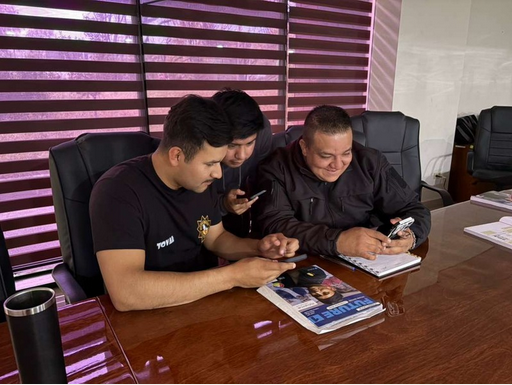
Across Mexico City, Guadalajara, and Monterrey, security personnel are stepping into classrooms to build English language skills that could prove critical in moments of urgency, confusion, or need during the next global soccer tournament set to take place in cities across North America in June and July 2026.
The initiative, led by the Regional English Language Office (RELO) at the U.S. Embassy in Mexico City, brings together English Language Fellows, Virtual Educators, and local teachers in a coordinated effort to strengthen communication where it matters most: on the front lines of public safety. Drawing on American expertise in English language education, the program showcases the United States’ leadership in preparing global partners for high-stakes international engagement.
When he heard of the large number of American visitors expected to visit Mexico during the tournament, Regional English Language Officer Russell Barczyk knew that enhancing the skills of law enforcement officers would be a key to the event’s success. “I thought that we could do that probably better than anyone else through our own resources of English Language Fellows and through an online network of Virtual Educators.”
A Multi-Layered Approach to a Complex Challenge
Barczyk’s budding idea has quickly evolved into a large-scale, multi-layered program. Today, nearly 40 classes—split between in-person and virtual formats—are reaching security personnel across multiple jurisdictions and roles, from police officers to civil protection teams and stadium staff.
At the center of the initiative is English Language Fellow Linda Lorenz, from Minnesota, who oversees curriculum development, teacher coordination, and program implementation.
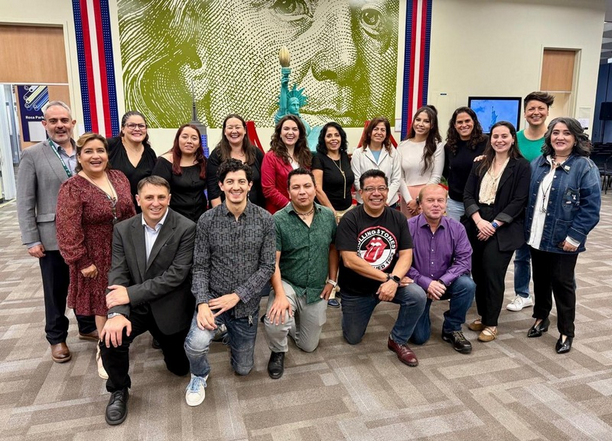
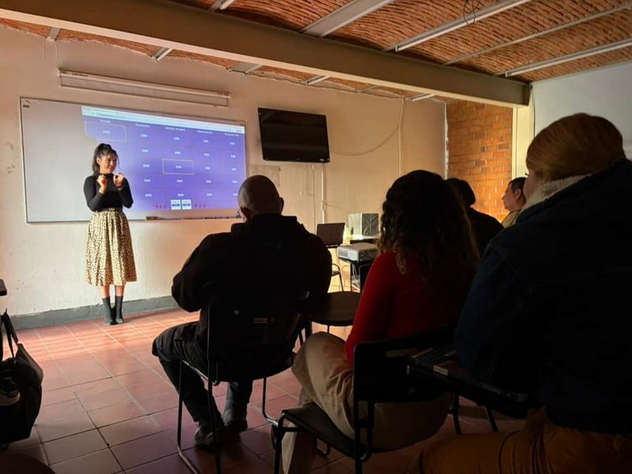
Left: Local Mexican teachers at the kick-off event in Mexico City in August 2025, posing alongside RELO Russell Barczyk (front row, first from left), Linda Lorenz (back row, fifth from left), and additional English Language Fellows and U.S. Embassy staff. Right: A local teacher in Guadalajara teaching a class of police staff
In addition to teaching two groups of police officers and one civil protection class, Lorenz has been working with nine local teachers in Mexico City, Guadalajara, and Monterrey to train and support them as they implement the custom curriculum Lorenz has designed for this program. The initial teacher training started in August 2025, with a two-day kick-off event in Mexico City, and has continued with monthly online meetings and a lively WhatsApp group.
In January 2026, seven Virtual Educators joined the team, adding online classes led by American educators to the rotation. Lorenz meets with the Virtual Educators on a biweekly basis during which they share ideas, resources, and solutions to challenges. “It’s just been a really nice collaborative experience,” emphasized Lorenz.
This structure has allowed the program to scale while maintaining coherence across formats and locations. With 20 in-person classes and 16 online classes, the program has reached over 500 participants across different agencies involved in stadium security.
Teaching the English That Matters
At the heart of the program is an English for Specific Purposes (ESP) curriculum Lorenz has designed for immediate, real-world use.
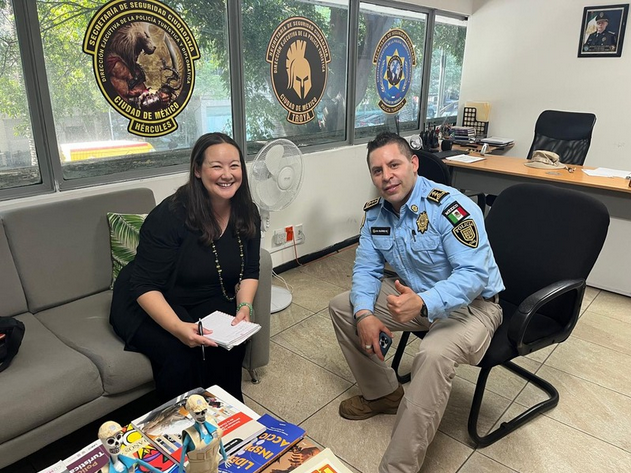
In the planning phase, Lorenz conducted interviews with local law enforcement leaders, such as the Executive Director of the Tourist Police for Mexico City, to discuss the concrete needs of the security personnel involved—from general language proficiency level to the language needed to successfully fulfill their job duties.
The curriculum begins with a Foundations module, which introduces concepts such as “numbers, letters, describing people, family,” followed by a Visitor Interaction module focused not just on the stadium experience, but more general tourist information, from local foods and restaurants to favorite tourist spots.
The next three modules are each dedicated to different security sectors: Police, which covers topics such as scams and petty crimes; Stadium Security, focused on transportation and giving directions; and Civil Protection (Protección Civil), with emphasis on protocols for different kinds of natural and man-made disasters.
Rather than teach English broadly, the curriculum hones in on what participants will actually need on the job. That means focusing on functional language—how to give directions, respond to emergencies, describe a suspect, and manage crowds using clear, direct communication.
But the curriculum is not static. Each instructor tailors the curriculum to the particular group he or she is working with.
“We do a lot of scenario-based instruction,” noted Virtual Educator Niccole Delestre, based in Manor, Texas, and working with the Zapopan Police Department in Guadalajara, home to Estadio Akron, where one of the matches will be held.
Delestre’s lessons are shaped directly by participant input. “I want what we’re discussing to be real,” she said. “I want to ground it in what they would actually do.”
“I want what we’re discussing to be real. I want to ground it in what they would actually do.” – Niccole Delestre
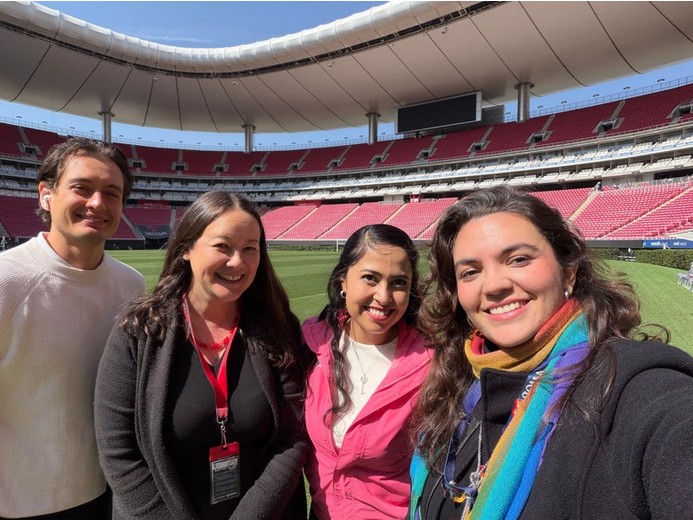
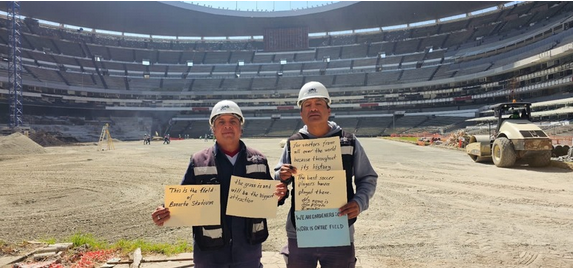
Left: Stadium staff members giving Linda Lorenz and their English teacher a tour of Akron Stadium in Guadalajara. Right: Stadium staff students made posters about their jobs, including the location of the stadium and what they do.
One of Delestre’s favorite lessons was built entirely around images from a participant. While working security at the stadium one day, he sent Delestre a series of pictures of the stadium, giving her the basis to build scenario-based lessons around what staff might actually encounter on game day, such as directing visitors to the right gate.
“I love it when it’s collaborative, because it gives [my students] voice and choice in what we are learning,” she emphasized.
Virtual Educator Stephen Starkey, based in Anaheim, California, has also customized his lessons to the needs of his students in the Monterrey police force, a mix of administrative staff as well as 911 operators and surveillance video analysts. While the latter “need to know very specific crime vocabulary, like, suspect description, locations, or directions,” administrative staff have “actually requested specifically polite language, […] things like could, would, or would you mind.”
One of his favorite activities includes using surveillance camera footage from Mexico City’s command and control channel to have participants “predict what the crime will be, translate from Spanish to English, and then also explain in real time what the students are seeing.”
Overall, both the virtual and in-person components have given participants the confidence to communicate in what is, for many, “a very fast-paced, challenging, unpredictable job,” explained Starkey.
Beyond the Event: Lasting Impact
As the countdown to the global event continues, the impact of this initiative will be felt in every interaction.
Whether helping a lost visitor, responding to an emergency, or managing a crowd, the ability to communicate clearly can shape outcomes in real time.
“It’s not only language,” reflected Lorenz, “but I think also it’s feeling more comfortable with helping people who are native English speakers.”
“They now have a toolbox that they can reach into” to communicate in the moment, noted Delestre.
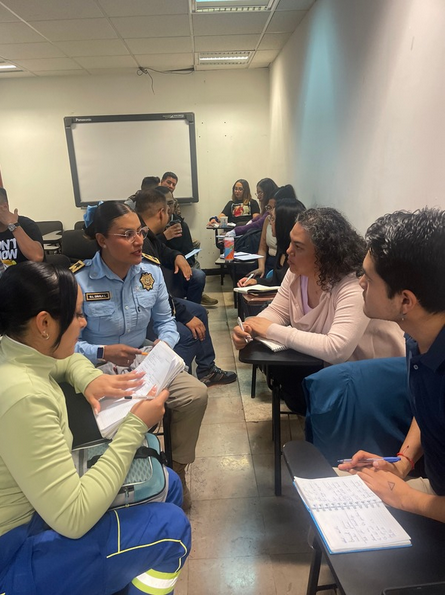
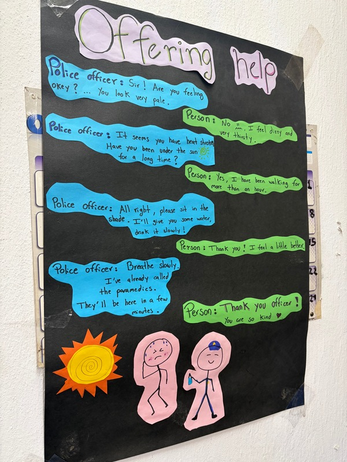
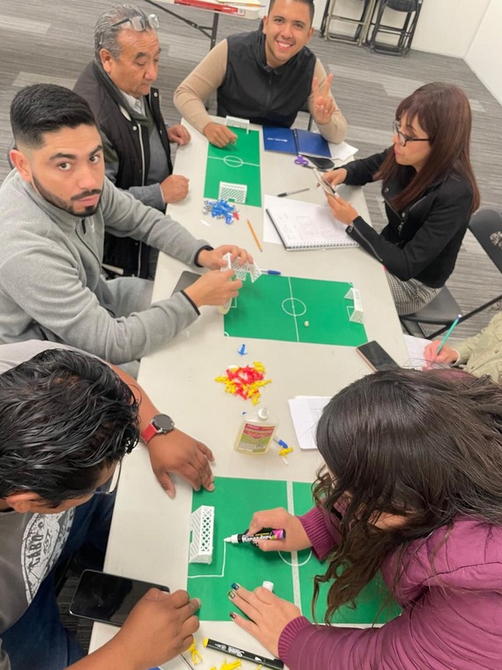
Left: One of Lorenz’s groups of police students practicing language for giving commands. Middle: A group of English language learners in the police force created a poster of language for offering help. Right: Stadium security staff learn about prepositions by describing position names in a mock soccer game.
In a moment when the world will be watching, that toolbox—and the confidence behind it—may be one of the most important skills they carry.
Beyond ensuring a positive experience during the summer 2026 events, the initiative has also provided a unique opportunity for all educators involved to expand their skillsets and tap into their expertise to make a lasting impact.
“It’s been quite a unique experience,” shared Starkey. “The [tournament] only comes around every four years, and then being able to apply English teaching to [it] is something I never thought I’d do as an English teacher.”
“Being able to apply English teaching to [the tournament] is something I never thought I’d do as an English teacher.” – Stephen Starkey
“I am having the time of my life,” exclaimed Delestre, who has relished the opportunity to combine her bachelor’s degree in criminal justice with her career in English language teaching.
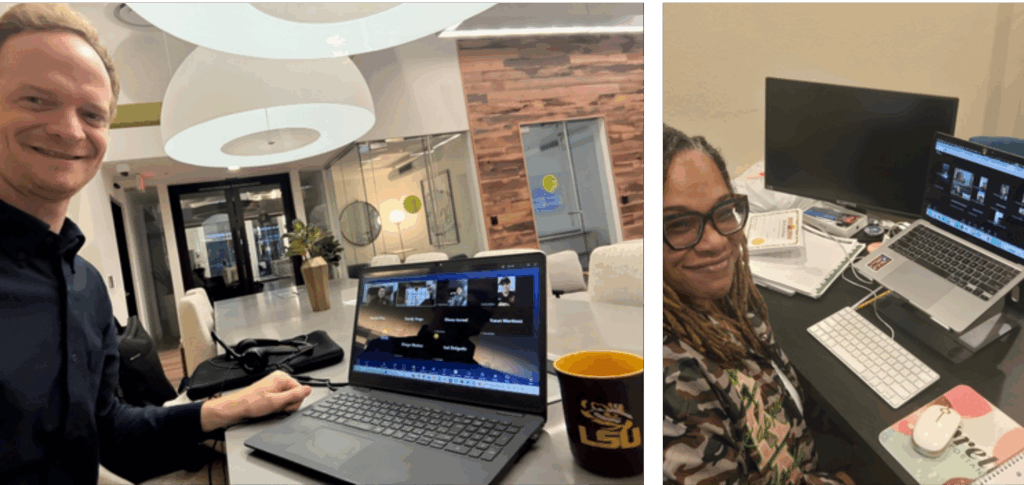
Virtual Educators Stephen Starkey (left) and Niccole Delestre (right) teaching groups of students online
Linda Lorenz has savored the opportunity to learn about an entirely new sector. “I am an English teaching expert, not a security expert, not a [soccer] expert, but I just dived into it, and I’ve learned so much.”
This initiative has also given the U.S. Embassy and Consulates around Mexico an opportunity to deepen their relationship with local law enforcement agencies.
Some partners have expressed interest in institutionalizing English training for Mexican law enforcement at a larger scale, reported Irene Violante and Josue Rodriguez, the RELO Assistants charged with managing this project. The U.S. Embassy has even had to turn away other sections of the police that have asked to join the courses.
“It’s given different offices [of the U.S. Embassy] […] access to some of our local Mexican law enforcement and first responder partners in a different way than they had before,” said Barczyk.
Ultimately, this collaborative effort demonstrates how American expertise in English language education is not only building critical skills for local security personnel but is also building U.S.-Mexico economic ties and contributing to a safer, more welcoming, and globally excellent experience for every visitor to the summer of soccer in 2026.