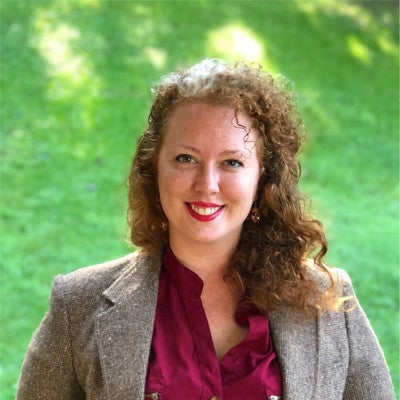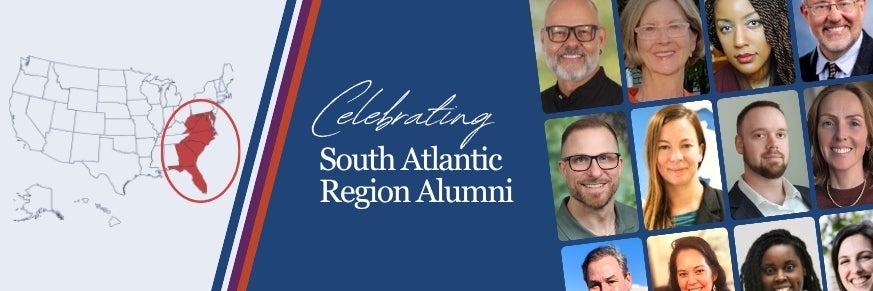
In 2026, English Language Programs proudly joins the nation in Freedom 250—Celebrating the Triumph of the American Spirit—as we honor the 250th anniversary of the founding of the United States. Throughout the year, we continue to highlight the remarkable contributions of our participants and alumni who share America with the world while bringing global perspectives back to their home communities.
This month, our focus turns to the South Atlantic Region—Florida, Delaware, Georgia, North Carolina, South Carolina, Virginia, and West Virginia—an influential area shaped by coastal heritage, dynamic cities, and deep historical significance. From Delaware’s colonial roots and Virginia’s pivotal role in the nation’s founding to the Carolinas’ rich traditions of education and community leadership, the region reflects a powerful blend of history and innovation. Florida’s global crossroads, Georgia’s thriving academic and cultural centers, and West Virginia’s mountain communities contribute distinct identities that together define the South Atlantic’s character.
Alumni from these states carry this spirit of resilience, curiosity, and community‑centered engagement into classrooms, teacher‑training programs, and educational initiatives across the globe. Their work strengthens English language education abroad while enriching learning communities at home. Together, their stories reflect how the South Atlantic’s heritage and forward‑looking institutions help advance U.S. leadership, international collaboration, and educational excellence.
Florida Alumni
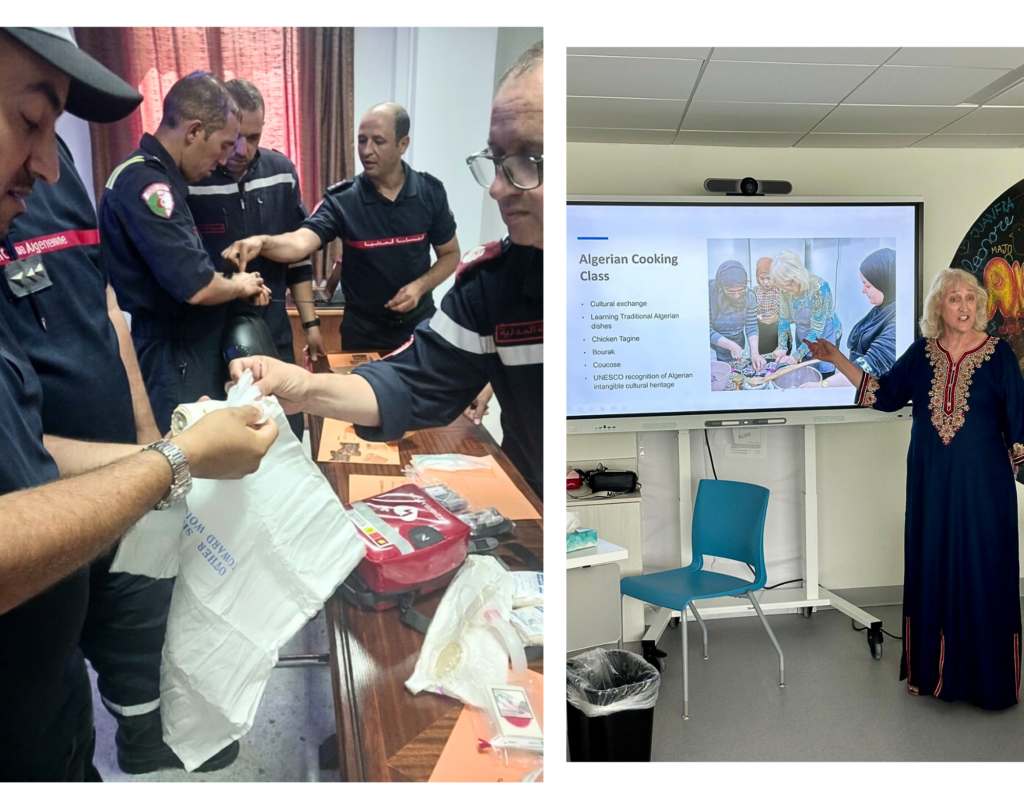
Linde Barrett (Florida) – Linde Barrett is a Miami, Florida educator whose two decades of teaching and leadership experience—including more than 20 years at Gulliver Preparatory School in Pinecrest, Florida—shape her work as an English Language Fellow in Algeria, where she strengthens professional English capacity across key government ministries to advance bilateral cooperation and regional stability. Since 2024, she has designed high‑impact English for Specific Purposes (ESP) programs that equip Algerian officials, first responders, diplomats, journalists, and civil protection officers with the communication skills needed to collaborate effectively with U.S. and international partners. Her projects include a Common European Framework (CEFR) aligned proficiency assessment for 39 emergency response personnel, an ESP course for the Civil Protection Directorate and INSARAG, memo‑writing instruction grounded in State Department plain language principles, and cultural programming such as slam poetry competitions, cooking classes, and American history presentations for American Corners. Barrett also developed an eight‑week professional English course at the Institute of Diplomacy and International Relations, reaching hundreds of ministry officials and strengthening Embassy access to often hard‑to‑reach sectors. During a return to Miami, she shared her Algeria experience with more than 150 young adults, deepening reciprocal cultural understanding between her home community and her host country. Her Fellow work reflects Florida’s commitment to American English education, intercultural communication, and international partnership.
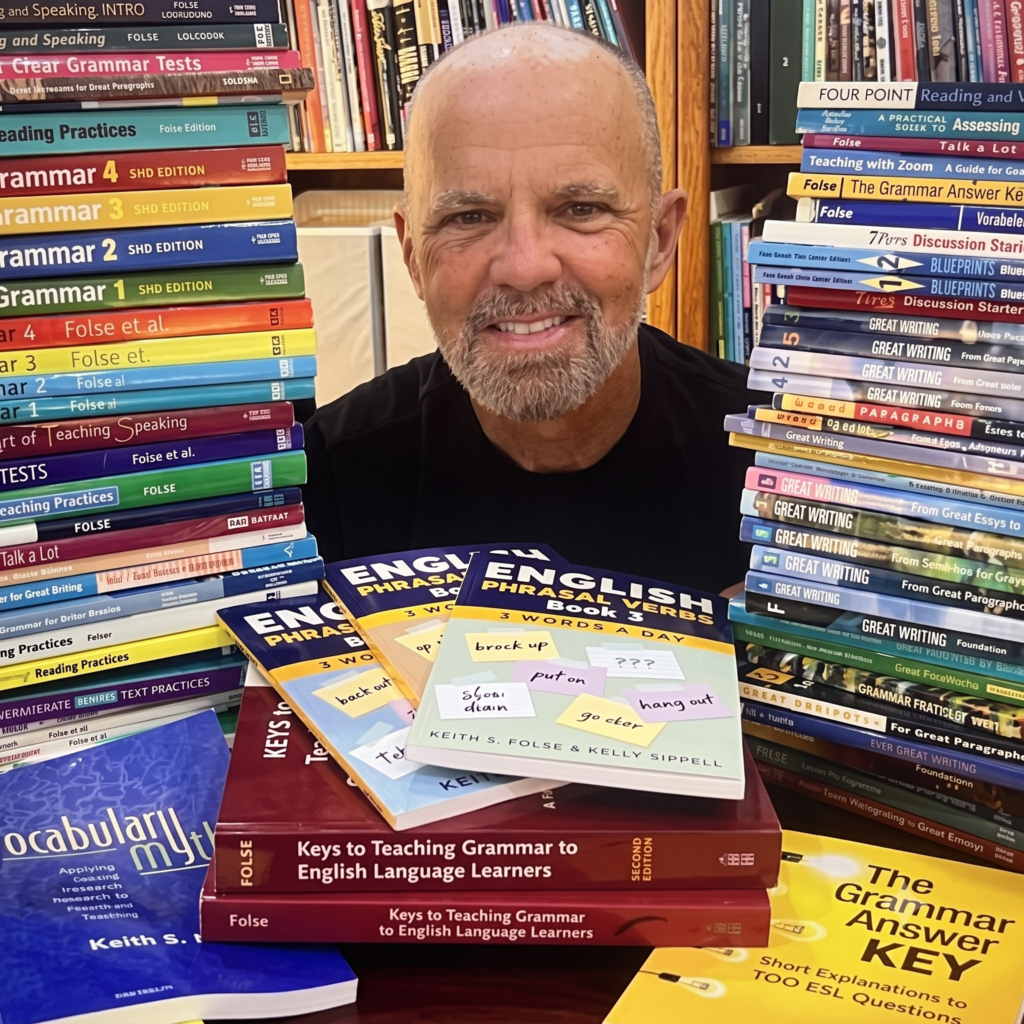
Keith Folse (Florida) – Dr. Keith Folse is an Orlando, Florida educator whose four‑decade career has shaped English language teaching in his home state and around the world. The author of more than 80 textbooks used globally in universities and teacher‑training programs, he has been a central figure in Florida’s TESOL community and spent more than 23 years at the University of Central Florida, retiring in 2023 as Professor Emeritus after training thousands of teachers and contributing to Florida’s reputation for research‑driven language education. In 2022, he served as an English Language Specialist for the NileTESOL Conference—the largest TESOL International affiliate in Africa and the Middle East—where his plenary session, “Meeting the New Norms in Teaching and Learning Vocabulary Successfully,” reached more than 3,000 Egyptian educators. His talk addressed post‑pandemic instructional challenges, highlighted new opportunities in online learning, and strengthened engagement that supports U.S. Mission goals and increases interest in studying in the United States. The impact of his Specialist work continues to resonate across Egypt’s English‑language teaching community, while his expertise in vocabulary acquisition, grammar, and teacher training reinforces Florida’s leadership in innovative TESOL practice. Folse’s global engagement, with previous State Department work in Argentina, Chile, Mexico, Saudi Arabia, and Morocco, reflects the state’s commitment to high‑quality language education and a better‑prepared, internationally connected workforce.
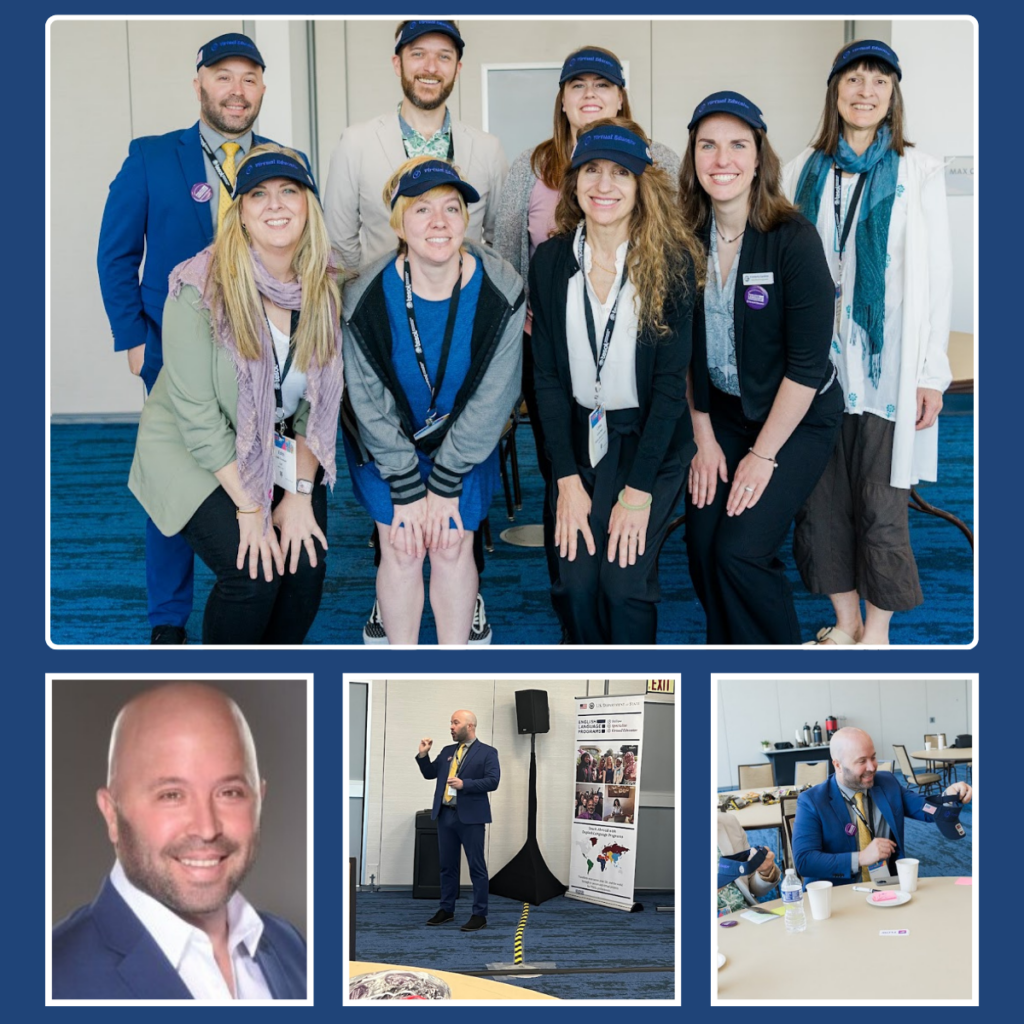
Raydel Hernández García (Florida) – Dr. Raydel Hernández García of Tallahassee is an education leader whose 20‑year career spans K–20 teaching, research, statewide policy leadership, and professional learning innovation. He now serves as Director of the Excellence Center for Educator Learning (ExCEL) in Miami Dade College’s School of Education, leading strategic initiatives that strengthen educator preparation, expand high‑impact professional learning, and build partnerships that elevate instructional quality across Florida. Previously, Hernández served as Chief of the Bureau of Student Achievement through Language Acquisition (SALA) at the Florida Department of Education, overseeing ESOL, Title III, Part A, and World Languages for more than 380,000 multilingual learners statewide. Holding a Ph.D. in Applied Linguistics and Education, he brings a research‑driven approach to improving instructional systems and measurable academic outcomes. In 2023, as a Virtual English Language Educator in the Philippines, he collaborated with Bukidnon State University to enhance instructional technology, strengthen assessment practices, and deliver sessions on communicative language teaching and HyFlex course design. He also shared his Virtual Educator experience at an English Language Programs pre‑convention event at TESOL International in Tampa, contributing to national dialogue on technology‑enhanced language teaching.
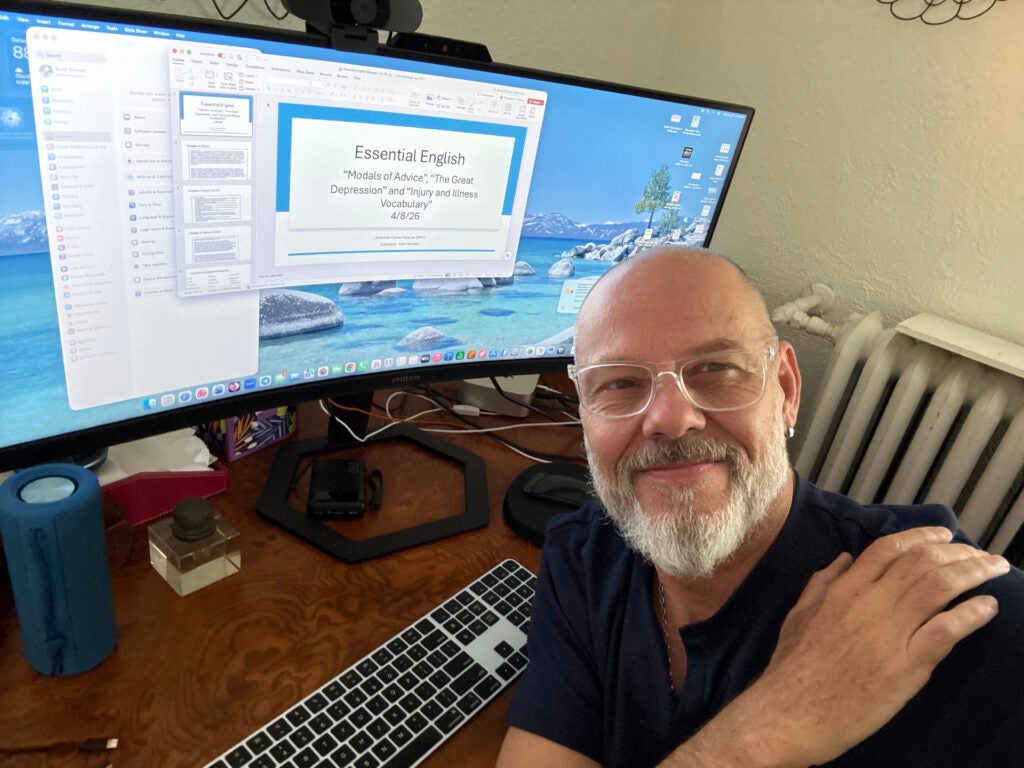
Keith Boswell (Florida) – Keith Boswell of Daytona Beach is an international educator, multilingual instructor, and higher‑education leader whose career spans teaching, program administration, and global English‑language engagement. Holding a BA in International Business and an MA in TESOL, he has taught English in Hungary, Peru, Switzerland, and Egypt, and previously directed English Language Programs at Virginia Commonwealth University, Longwood University, and Embry‑Riddle Aeronautical University. As a Virtual English Language Educator in Mexico (2025), Boswell supported the University of Colima’s rollout of the English for Semiconductors MOOC, helping STEM students develop professional English, data‑description skills, and workplace communication essential to the semiconductor sector—a field critical to U.S. economic competitiveness, supply‑chain resilience, and advanced manufacturing. In 2026, he served as a Virtual Educator in Eastern Europe, leading communicative, student‑centered English courses for adult learners and facilitating small‑group seminars that strengthened real‑world speaking skills and expanded cultural understanding of contemporary U.S. life. Fluent in English, Spanish, and Arabic, Boswell now teaches Spanish as faculty in the World Languages Department at Daytona State College, bringing global experience and cross‑cultural expertise to his students.
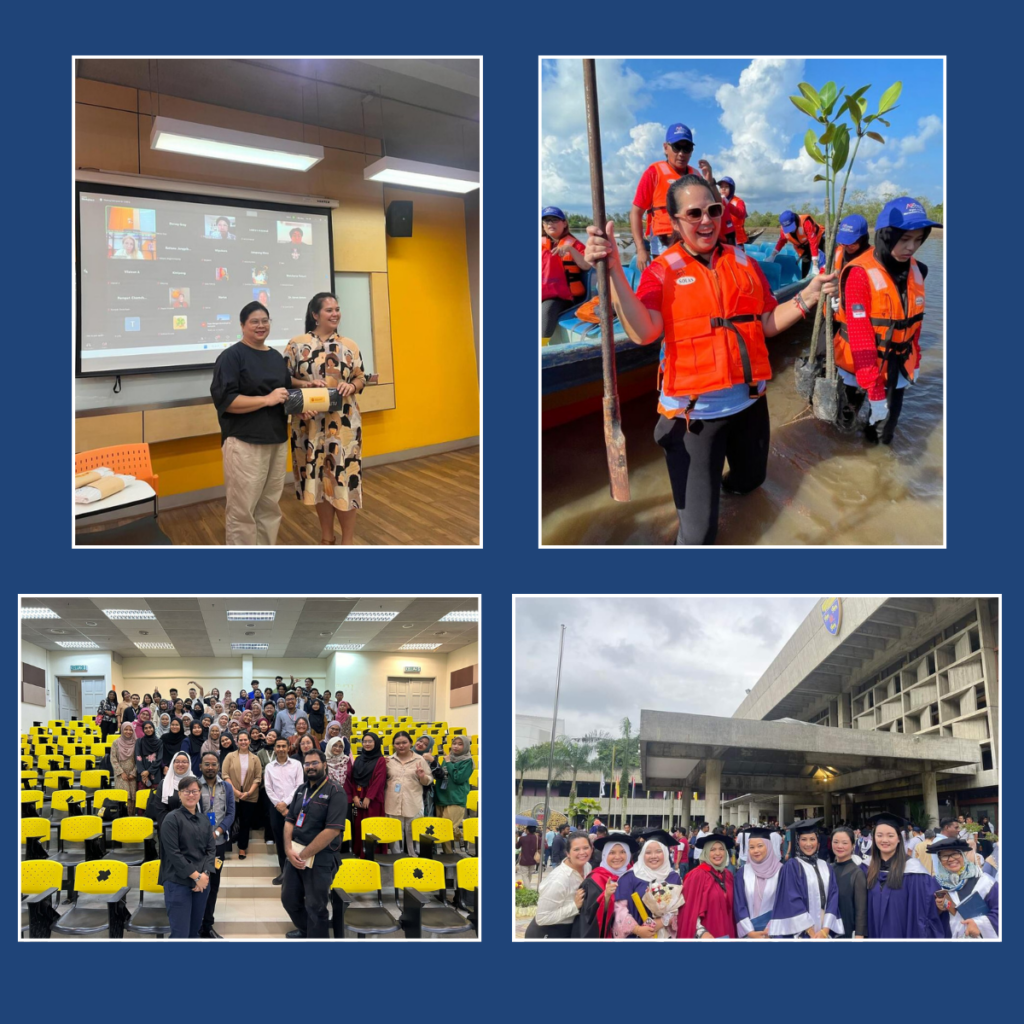
Darcey Gray (Florida) – Dr. Darcey Gray of Jacksonville is an educator, university instructor, and international teacher‑trainer whose 21‑year career spans secondary education, district‑level leadership, and global English‑language programming. A graduate of the University of North Florida and the University of Phoenix, she holds state certification in Reading, TESOL, English, and Educational Leadership. As an English Language Fellow at Universiti Malaya in Kuala Lumpur (2022–2024), Gray taught courses for future English teachers, introduced modern instructional strategies, and supported U.S. Embassy Kuala Lumpur’s efforts to strengthen youth capacity and people‑to‑people engagement. Her Fellowship included a hybrid workshop at Thammasat University in Bangkok on how to properly use AI in research, a plenary session in Phuket on incorporating Action Research into teaching practice, and leadership programming for Malaysian Access Alumni—where she guided students in public speaking and joined them in planting mangroves as part of a leadership initiative. Gray also served as an English Language Specialist in Tunisia, training national ELT inspectors in Action Research to help them design, implement, and cascade classroom‑focused research projects to thousands of teachers nationwide. A seasoned Virtual English Language Fellow, she has taught educators and university students in Libya, Vietnam, and Morocco. In Florida, she spent 16 years with Duval County Public Schools as a teacher, Reading Coach, ESOL Specialist, and IB Coordinator, later supervising teacher candidates at the University of North Florida. She currently teaches graduate literacy, writing, and action‑research courses as an adjunct instructor at Arkansas State University.
Delaware Alumni
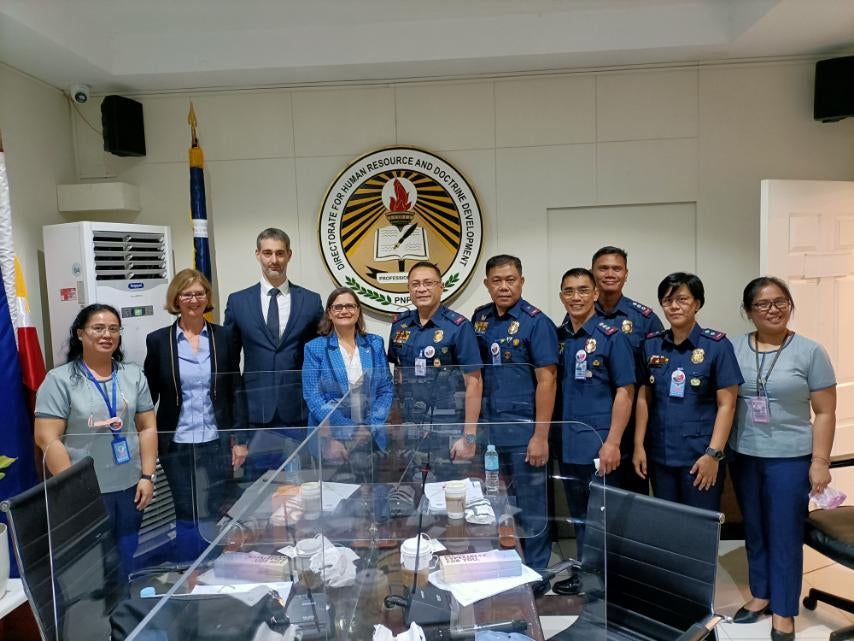
Donna Bain Butler (Delaware) – Donna Bain Butler is a Rehoboth Beach, Delaware educator and applied linguist whose career blends international legal‑English training, professional‑communication development, and higher‑education teaching. As an English Language Specialist in the Philippines in 2023, she conducted a national‑level needs assessment with the Philippine National Police, identifying critical gaps in multilingual report writing, translation accuracy, and procedural correspondence—findings that informed foundational modules for rank‑and‑file officers and laid groundwork for instruction to improve interoperability with the United States. She has strengthened legal and governmental communication across Nepal, the Philippines, and Eastern Europe through tailored, interactive programs grounded in needs assessment and cross‑cultural pedagogy. In Nepal, she led intensive workshops for federal prosecutors and senior government officials, helping participants use American English in their legal and administrative work while introducing communicative strategies that supported professionals seeking a stronger identity in English; she also produced a tutorial video to ensure the training could be carried forward to future cohorts. Her 2025 Eastern Europe project advanced legal‑English proficiency for educators and practitioners residing in Latvia and Georgia through comparative‑law workshops and reflective practice. In Delaware, Butler teaches Legal English and SJD Advanced Legal Writing at Widener University Delaware Law School, bringing global expertise to her work as an international educator.
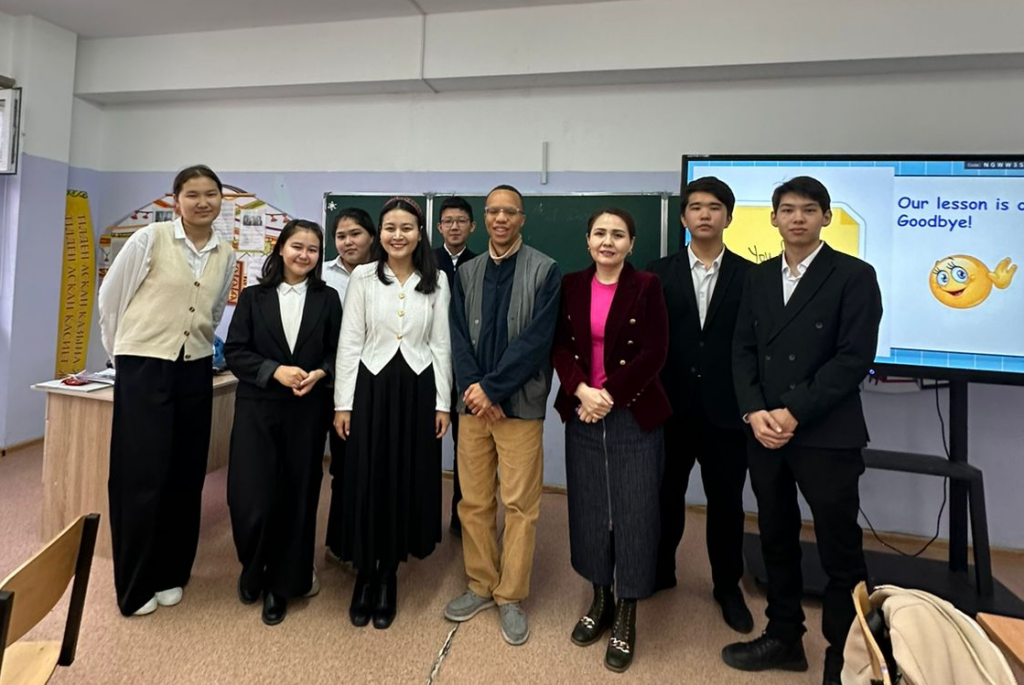
Charles McKinney (Delaware) – Charles McKinney is an American educator whose 15‑year career in international education reflects Delaware’s tradition of curiosity, service, and global engagement. His professional path began in northern Delaware, where a year of substitute teaching sparked his commitment to expanding educational access and led him abroad to launch his TEFL career in South Korea in 2010. A graduate of Immaculata University, McKinney later returned stateside briefly, working as a graduate writing tutor at Wilmington University before joining the Peace Corps, serving in Rwanda and North Macedonia. As a Virtual English Language Educator with American Spaces Ethiopia (2022), he strengthened speaking and writing skills for youth and adults across six centers, culminating in a student‑led virtual Toastmasters meeting that showcased new public‑speaking confidence. During his 2023–2024 English Language Fellowship in Kazakhstan, he introduced U.S. educational standards and digital‑learning tools to teachers, inspired Access students through global‑learning travelogues, and led virtual English sessions for Kazakhstan’s Olympic athletes, sharpening skills for global events. Now a freelance editor and writer, McKinney is developing his first book while applying leadership skills gained through his EMBA from the Valar Institute at the Quantic School of Business and Technology, his membership in the Editorial Freelancers Association, and his service on the board of a Rwandan NGO founded by a former student.
Nathan Pinson (Delaware) – Nathan Pinson is an English Language Fellow serving at the University of Banja Luka in Bosnia and Herzegovina (2024–2026), where his work supports a priority region for the U.S. Embassy and advances efforts to strengthen critical thinking, digital literacy, and positive engagement with American culture. He has led major initiatives including a Thanksgiving celebration at the Banja Luka American Corner that welcomed more than 30 community members, Fulbright ETAs, and university students, and a series of highly attended workshops at the Tuzla English Language Teaching Seminar, where he trained educators in drama‑based instruction and role‑playing techniques to boost classroom engagement. Pinson also guided third‑year English majors in producing a collaborative anthology of short stories, mentoring students through narrative development, editing, and publication. A graduate of the University of Delaware, he brings a strong foundation in English literature and history to his Fellowship, along with a deep commitment to cultural exchange and educator skill improvement.
Georgia Alumni
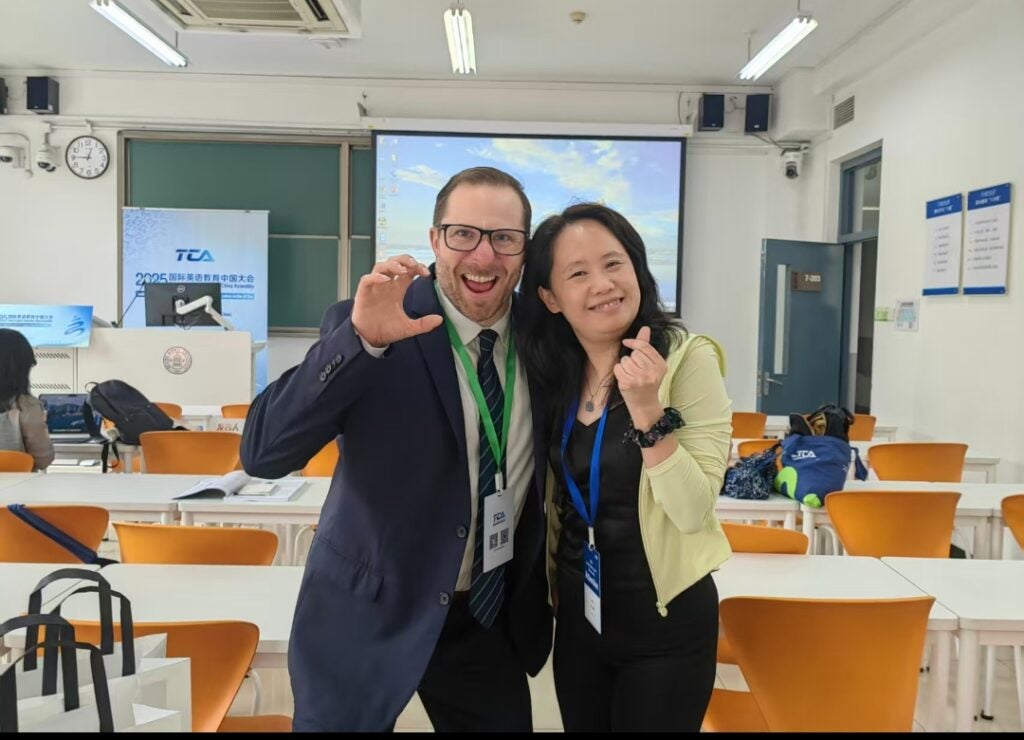
David Chiesa (Georgia) – Dr. David Chiesa of Athens, Georgia is a Clinical Associate Professor of Language and Literacy Education in the University of Georgia’s Mary Frances Early College of Education, where he coordinates the ESOL Endorsement, TESOL Minor, and graduate TESOL Certificate programs and serves as Program Coordinator for UGA’s International Teaching Assistant Program. A graduate of Georgia State University’s Ph.D. program in Applied Linguistics and a board member and co‑editor of the GATESOL Journal, Chiesa strengthens Georgia’s professional community while preparing educators to serve multilingual learners statewide. As an English Language Fellow and Specialist, he has advanced U.S. Mission goals across China, Hong Kong, Mongolia, the Philippines, and Uzbekistan through multi‑phase teacher‑development initiatives that integrate language assessment literacy, interactional competence, project‑based learning, and ethical, human‑centered uses of AI. His recent RELO Beijing work—including a year‑long virtual assessment program, multi‑city workshops training more than 2,000 educators, and Training‑of‑Trainers programs—has rebuilt trust with key institutions and established sustainable communities of practice. Chiesa also made history in Uzbekistan as the first American to serve as an official opponent in a doctoral defense, strengthening academic ties at the highest levels. Across China, Mongolia, and Hong Kong, his AI‑focused projects have equipped educators with forward‑looking tools that elevate instructional quality, innovations he now brings back to Georgia to enrich UGA coursework and advance the state’s leadership in cutting‑edge English language education.
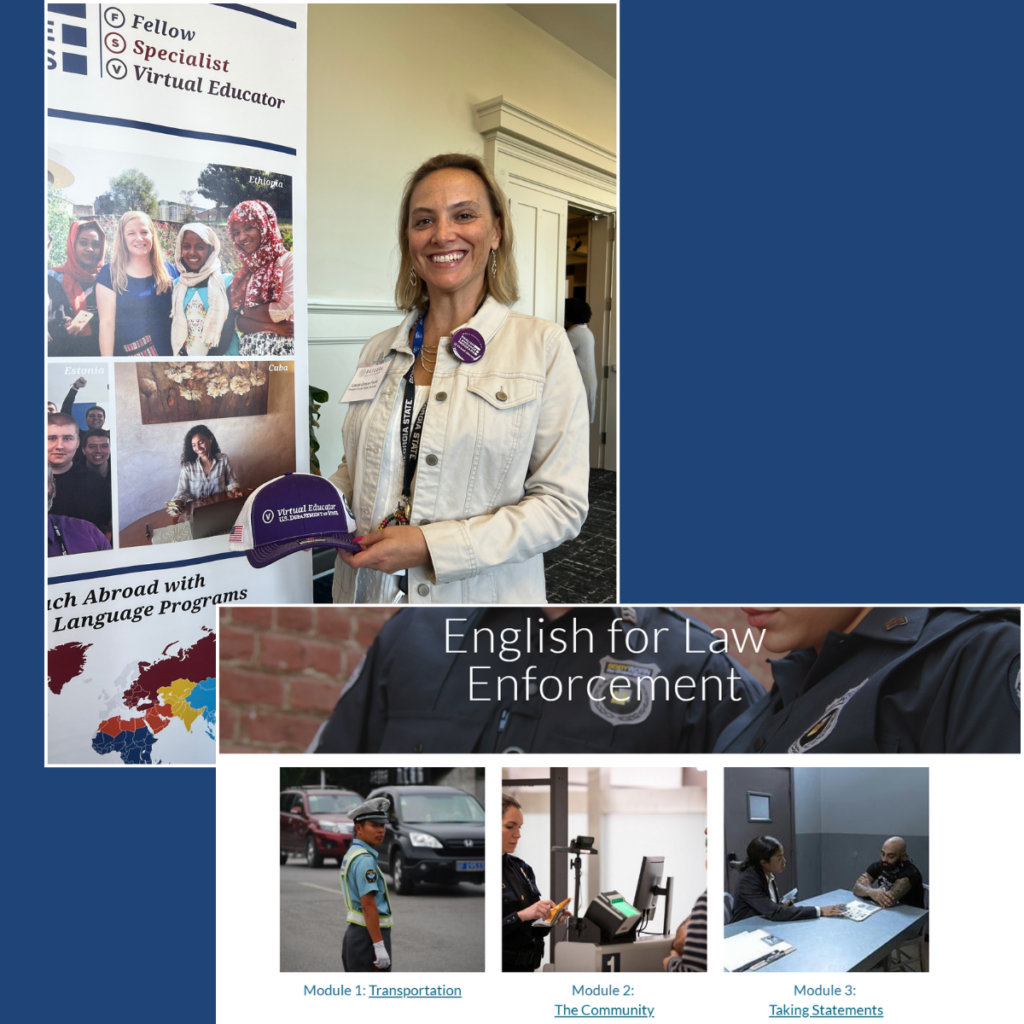
Laura Faris (Georgia) – Laura‑Grace Faris, an educator based in Savannah, Georgia, brings twenty years of experience teaching ESOL/ESL/EFL across elementary, secondary, and adult‑education settings to her work as a Virtual English Language Educator in Mexico. A longtime Georgia educator, she has served ESOL learners in Fulton County Schools for more than a decade, taught adult English learners at Gwinnett Technical College, led the ESL department at Clayton State University, and now teaches ESOL in the Savannah‑Chatham County Public School System. Faris has also trained teachers in Thailand and directed instructional programs for the University of North Georgia’s campus in Nakhon Nayok. As a Virtual Educator, she designed and delivered English for Specific Purposes instruction to law‑enforcement officers in Chihuahua, creating a hybrid curriculum supported by a Canvas course, Padlet, Quizlet, and a dedicated website to strengthen officers’ communication with English‑speaking tourists along the Ciudad Juárez–El Paso border. Her modules addressed transportation, tourism, questioning strategies, victim services, emergency response, and criminal‑law procedures, helping officers provide safer, more effective assistance in binational contexts. Across all her work, Faris is committed to helping multilingual learners unlock their language potential and pursue new educational and professional opportunities.
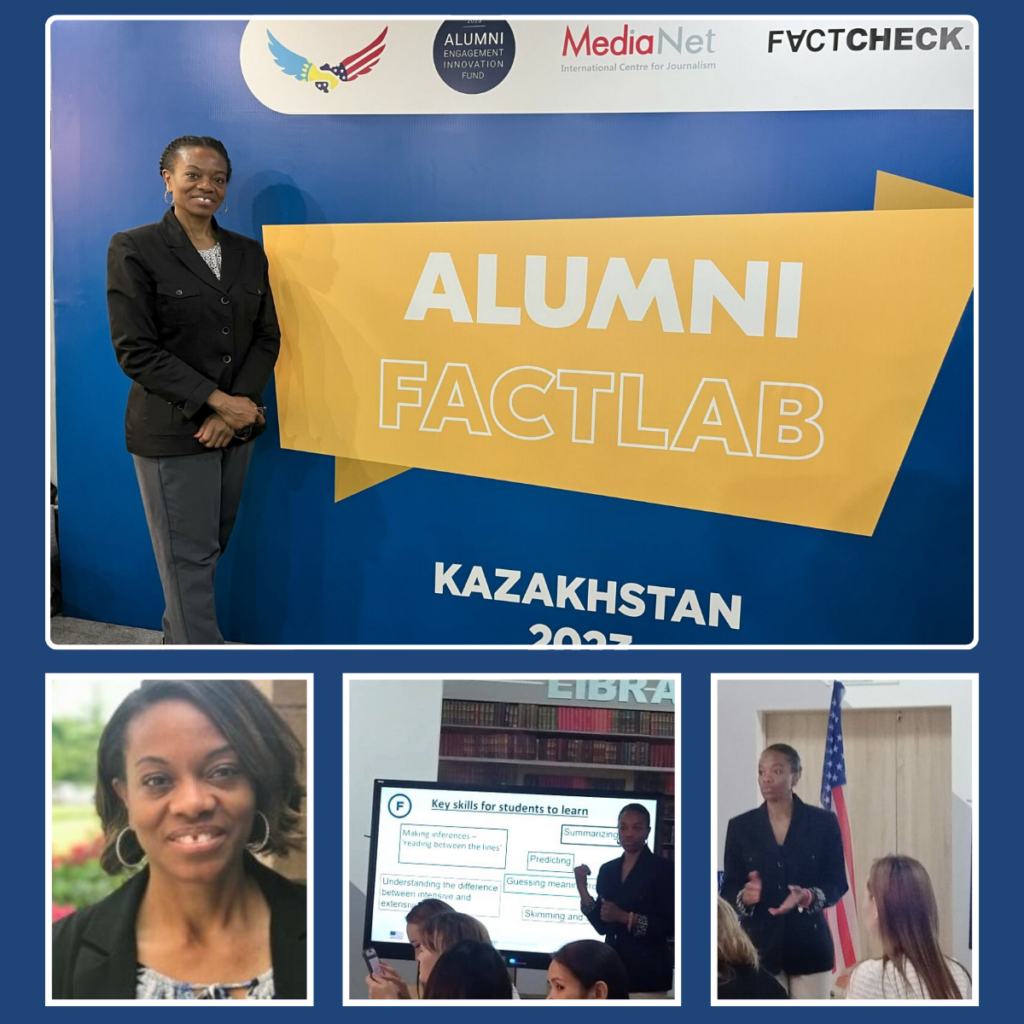
Lakisha Edwards (Georgia) – Lakisha Edwards of Marietta, Georgia is an English language educator, U.S. military veteran, and global education leader whose career spans more than a decade of teaching K–12 and adult ESOL learners across a wide range of instructional settings. She holds a B.A. in Biology from Tuskegee University and an M.A. in TESOL from Kennesaw State University, and her professional path includes service in Europe, the Middle East, North Asia, and throughout the United States. Edwards has taught in Georgia as a volunteer, tutor, and full‑time instructor, providing differentiated instruction and creating a classroom environment grounded in encouragement and respect. As an English Language Fellow in Kazakhstan, she introduced U.S.‑based teaching standards, digital tools, and AI‑supported instructional strategies to pre‑service and in‑service English teachers at Kazakh National Women’s Teacher Training University. Edwards delivered widely requested seminars on using AI as an educational tool and trained Almaty schoolteachers across multiple subject areas in communicative reading activities adaptable to English, Kazakh, Russian, Business, Science, and Mathematics. She currently teaches English for the DeKalb County School District. Edwards also teaches adult ESL part time for the Latin American Association, strengthening her ongoing efforts to expand high‑quality English language education in Georgia and beyond.
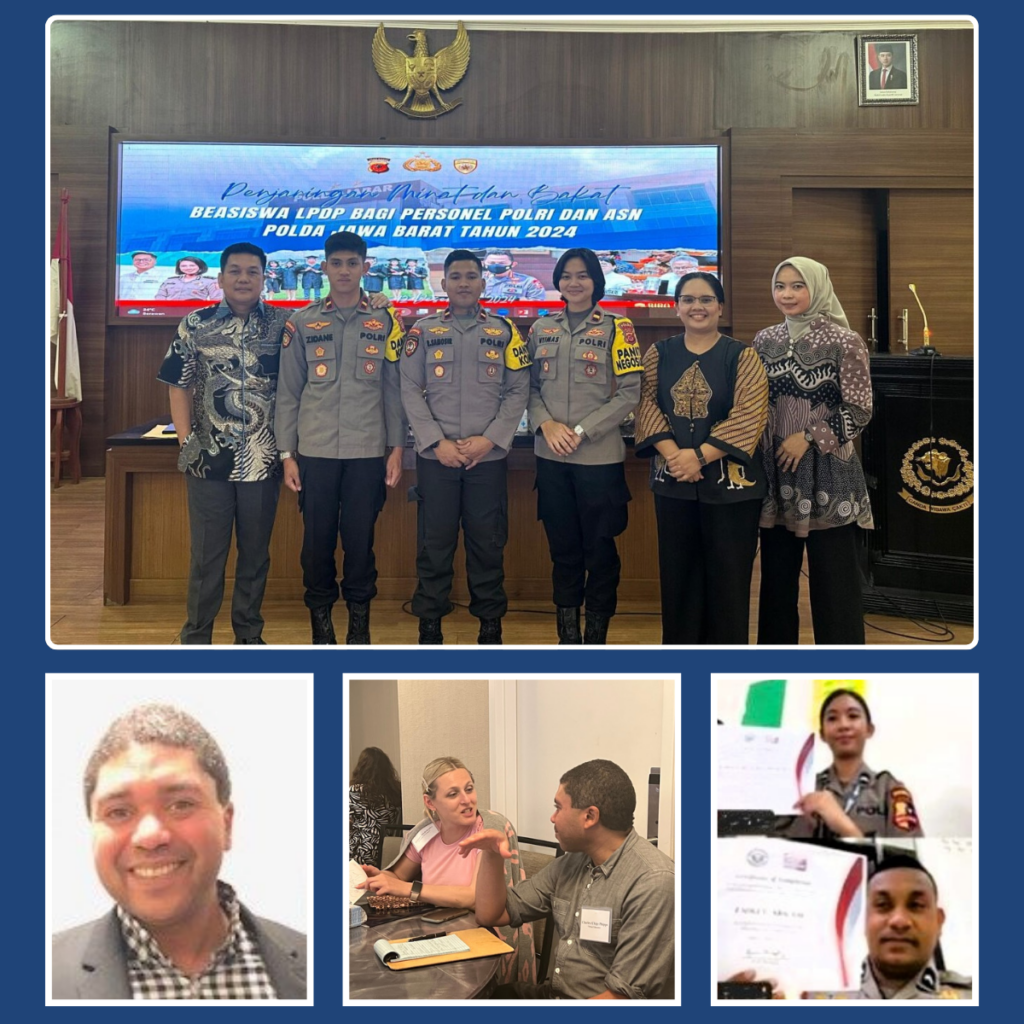
Charles Phipps II (Georgia) – Charles Phipps II, an educator from Stone Mountain, Georgia, brings more than seventeen years of experience supporting multilingual learners to his role as a Virtual English Language Educator in Indonesia from 2024–2025. A former U.S. Peace Corps volunteer in Zambia and a graduate of the University of Arizona’s M.A. TESL program, Phipps has built a career centered on curriculum design, academic English instruction, and assessment. As a Virtual Educator in Indonesia, he partnered with SEBASA Police Academy—the national language‑training center for the Indonesian National Police—to deliver intensive IELTS Speaking preparation for cohorts of law‑enforcement professionals seeking admission to Western graduate programs. His virtual trainings strengthened officers’ general, academic, and professional English skills, advancing mission goals focused on enhancing interoperability, supporting justice‑sector professionalism, and expanding opportunities for Indonesian police to pursue advanced study in the United States. In 2025, Phipps also represented Georgia at the Virtual Educator Impact Exchange in Washington, D.C. and San Antonio, sharing his project work at ASCD and ISTELive 25 and highlighting the role of educational technology in global language instruction. Across all contexts, he brings Georgia’s commitment to service‑driven, learner‑centered education to classrooms around the world.
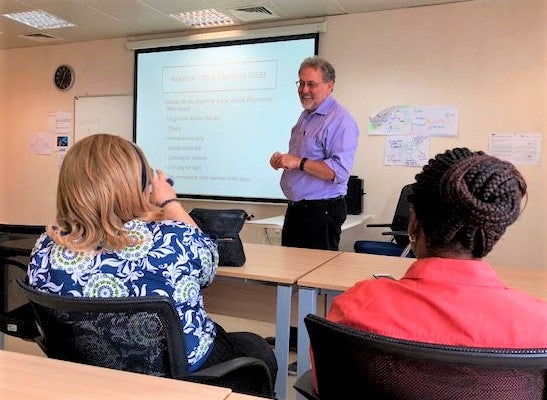
John Bunting (Georgia) – Dr. John Bunting of Atlanta, Georgia is a Principal Senior Lecturer in the Department of Applied Linguistics and Director of the Intensive English Program at Georgia State University, where he has taught since 2001 and helped build one of the state’s most impactful academic English programs. Holding both his M.A. and Ph.D. in Applied Linguistics from Georgia State, Bunting’s textbooks—including Grammar and Beyond 4, Vocabulary in Use: High Intermediate, and College Vocabulary 4—have been widely used in ESL/EFL classrooms worldwide. Over more than twenty years as an English Language Specialist, he has advanced U.S. Mission goals in Mexico, the Dominican Republic, Tanzania, Qatar, Türkiye, and Eastern Europe through high‑impact initiatives ranging from technology‑enhanced language teaching in Qatar’s universities, to medical‑English needs assessments supporting Tanzania’s health sector, to corpus‑based Legal English curriculum development at Yaşar University. His most recent 2026 Specialist project in Mexico builds on a long‑standing partnership with Universidad Pedagógica Nacional, where he helped update the successful one‑year online TEFL specialization and launch development of a second year leading to a full master’s degree—work he also highlighted in a plenary at MEXTESOL 2025 attended by more than 700 educators. In recognition of his sustained global impact, Bunting received Georgia State University’s 2024 Faculty Award for Global Engagement – Teaching, Service, & Outreach, honoring his outstanding contributions to international collaboration and community‑centered language education. These global engagements continue to enrich Georgia’s educational landscape, informing GSU’s community‑based English programs in Clarkston and reinforcing John’s commitment to culturally responsive, community‑driven English language teaching.
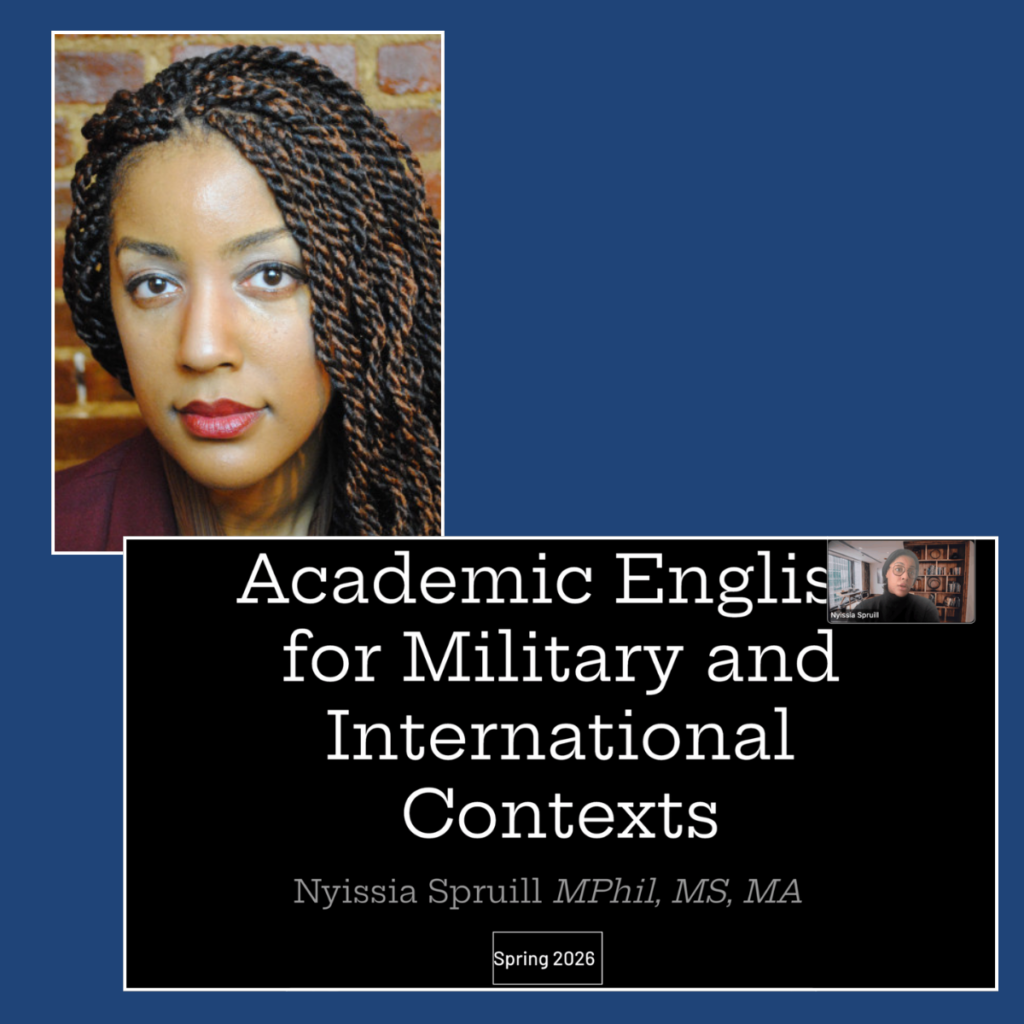
Nyissia Spruill (Georgia) – Nyissia Spruill, an Atlanta‑based educator with more than a decade of PK–12 teaching and leadership experience, served as a Virtual English Language Educator in Albania in 2026 and Ukraine in 2025. In Albania, she partnered with the Armed Forces Academy to deliver a semester‑long series of English courses for cadets preparing for future leadership roles in military environments. Her customized curriculum integrated academic and military English, structured reporting, mission briefings, decision‑making, and English for Specific Purposes, strengthening cadets’ ability to communicate in professional and multinational contexts. This work directly advanced U.S. strategic interests by improving Albania’s English proficiency and enhancing the country’s ability to collaborate with U.S. forces on joint operations, cybersecurity initiatives, and regional security efforts. In Ukraine, Spruill led two semester‑long virtual courses at Poltava National Pedagogical University, providing practical English instruction for undergraduates and an EFL methodology course for pre‑service and in‑service teachers, building both language proficiency and teaching confidence. Her international work is grounded in extensive New York experience—including service as a Teach For America ESL teacher and leadership roles supporting bilingual, special education, and EL students—alongside research interests in multicultural education, international education policy, and culturally relevant teacher development.
North Carolina Alumni
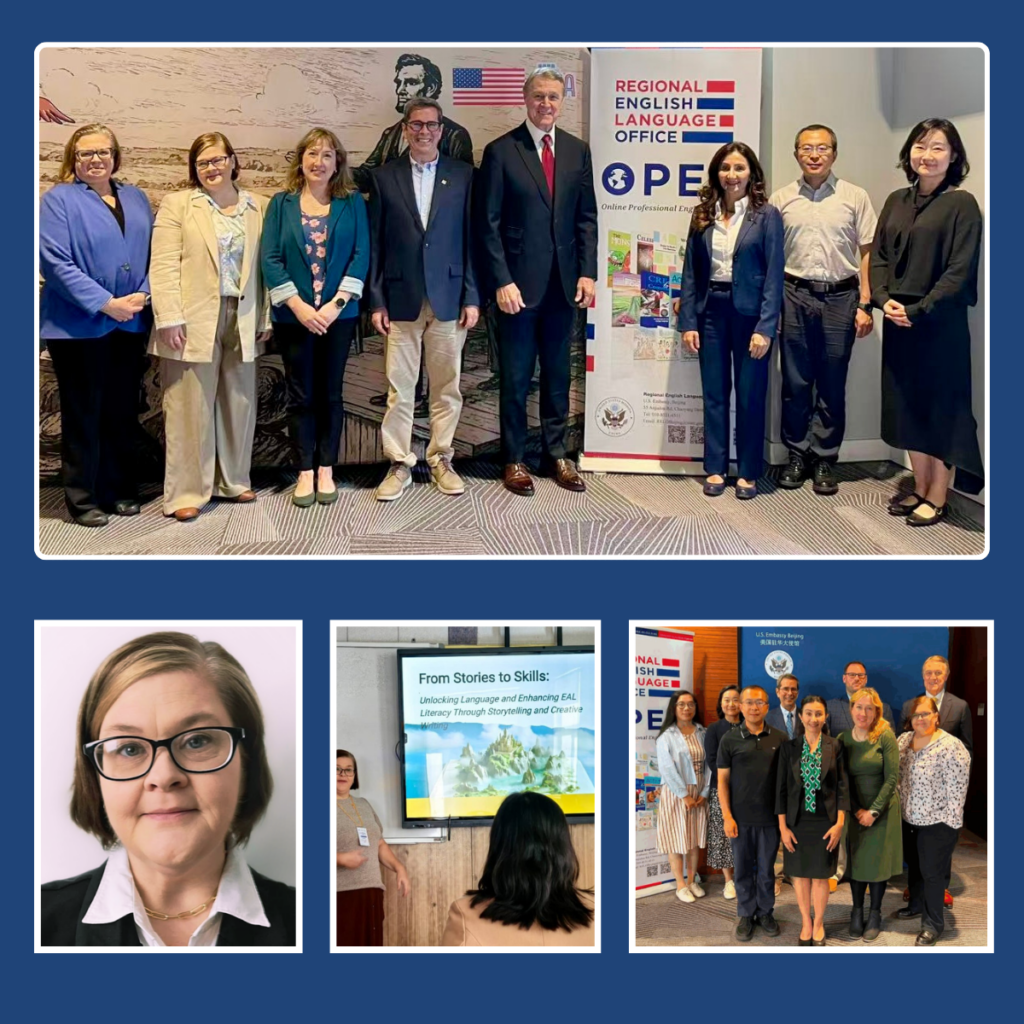
Stephanie Hanes (North Carolina) – Stephanie Hanes, an educator based in Winston‑Salem, North Carolina, brings more than a decade of language‑teaching experience to her current role as an English Language Fellow in China. A graduate of the University of South Carolina with a B.A. in French and of Anglia Ruskin University in the United Kingdom with an M.A. in Applied Linguistics and TESOL, she taught multilingual learners in Winston‑Salem/Forsyth County Schools before beginning her fellowship, grounding her international work in the values and classroom practices shaped in North Carolina. During her first fellowship year at Qufu Normal University, Hanes taught Public Speaking and Debate, Academic Writing, and Culture and Society of English‑Speaking Countries, introducing student‑centered, communicative approaches that highlight the strengths of American education. Now serving at Xi’an International Studies University, Hanes teaches Phonetics and Business English and continues to support faculty and students through workshops, curriculum design guidance, and collaborative professional development. Her fellowship has expanded U.S. engagement with Chinese universities through teacher‑training initiatives, conference presentations, and outreach activities that promote cross‑cultural understanding, and she collaborates with Fellows across China on educational videos and public‑diplomacy efforts that have reached millions of viewers. Her recent meeting with U.S. Ambassador David Perdue underscored the significance of her work in advancing educational exchange and strengthening professional connections. Across her fellowship experiences, Hanes draws on her U.S. teaching experience to equip students and educators in China with linguistic, intercultural, and critical‑thinking skills that support success in an increasingly interconnected world.
Jeremiah Tarbutton (North Carolina) – Jeremiah (Jeremy) Tarbutton, an educator from Boone, North Carolina, and a licensed North Carolina teacher, brings more than fifteen years of experience in teacher development, curriculum design, and international education to his work as an English Language Fellow in Brazil. At the Federal University of Espírito Santo (UFES) and later with the Ceará State Education Secretariat, he strengthened English teaching and teacher‑training systems through university instruction, statewide professional development courses, and a 1,500‑kilometer outreach tour that connected him directly with educators and students across Ceará’s interior. In 2025, Tarbutton co‑led the Citizen Diplomacy Action Fund (CDAF)–supported Teacher Education Summit in Piauí, a three‑day hybrid event that brought together more than 300 educators from 19 countries and 20 Brazilian states to advance evidence‑based English language teaching. His commitment to U.S. educational diplomacy also extends to Central Asia, where he served as an English Language Specialist in Kazakhstan, delivering intensive training on applying AI to English instruction for STEM learners. Tarbutton now serves as a TEFL Advisor with The Foundation for Scholarly Exchange (Fulbright Taiwan), supporting English Teaching Assistants and Taiwanese educators through workshops, observations, and professional‑development programming. Across all his engagements, he brings the perspective of a North Carolina educator dedicated to innovation, teacher empowerment, and global partnership.
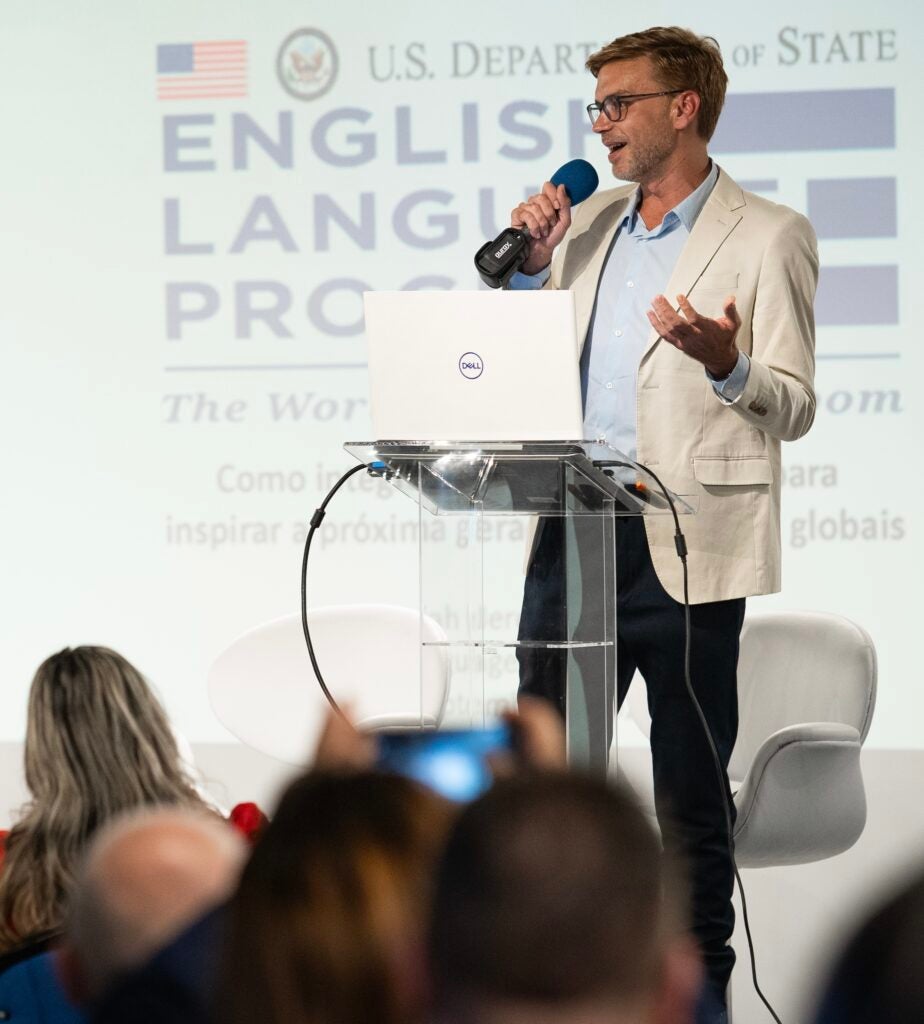
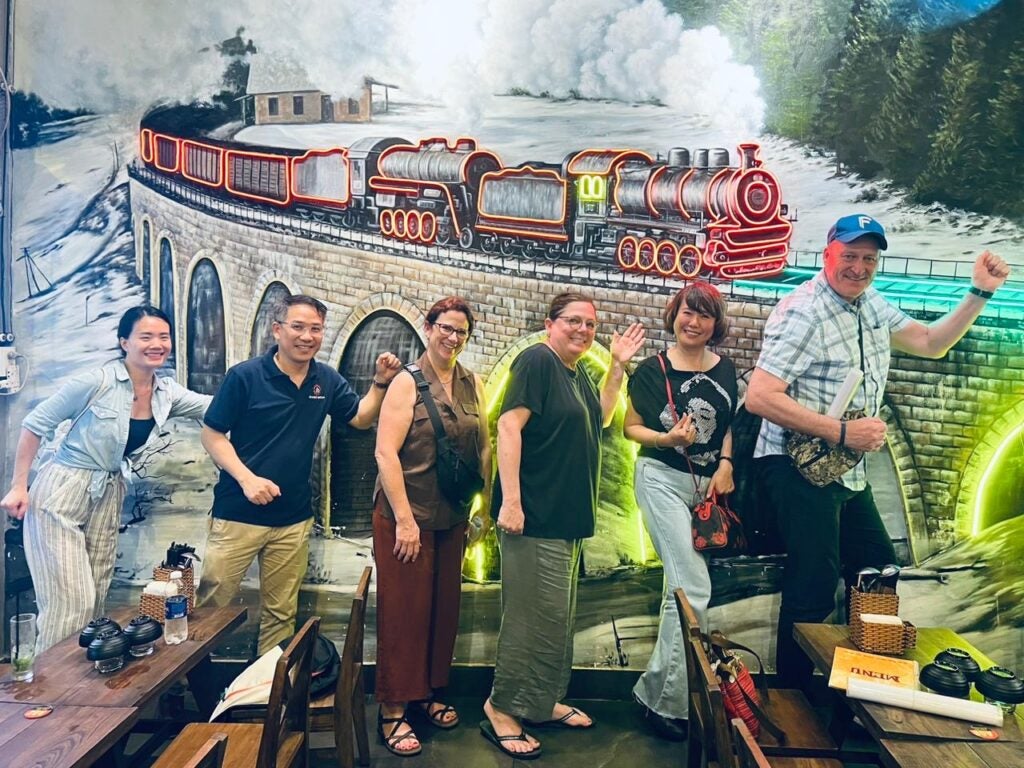
Paula Wilder (North Carolina) – Paula Wilder, an educator from Greensboro, North Carolina, brings decades of TESOL expertise and international program leadership to her work as an English Language Specialist and Alumni Ambassador. As Director of International Programs at Greensboro College, she oversees global partnerships, faculty‑led projects, and study‑abroad initiatives while teaching in the MA‑TESOL program; across North Carolina, she also mentors international teachers through NC State University’s Global Training Initiative and consults on the English for Academic Purposes program she originally developed at Durham Technical Community College. Wilder’s Specialist projects in Sri Lanka and Vietnam have had lasting impact both abroad and at home: in Sri Lanka, she trained university lecturers in academic writing, speaking, and materials design, supporting faculty navigating significant national challenges, and in Vietnam she joined a diplomatic team on a ten‑day train journey along the reunification railway, delivering workshops on differentiated instruction in ten cities, conducting a nationwide needs analysis, and later co‑developing a 12‑module online course for the Ministry of Education and Training. These global experiences enrich her teaching and leadership in North Carolina, reflecting her commitment to culturally responsive pedagogy, international collaboration, and the power of educational exchange.
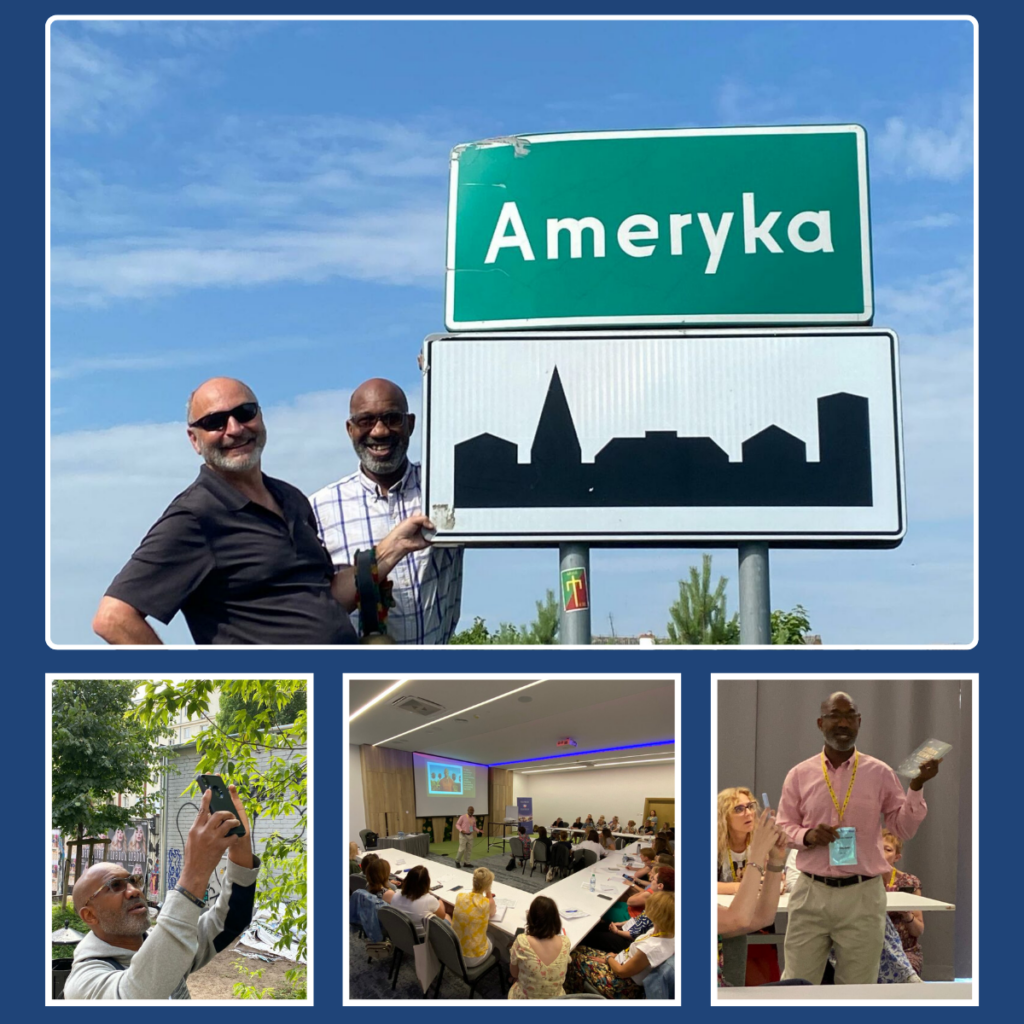
Anthony Nesbit (North Carolina) – Anthony Nesbit, an educator from New Bern, North Carolina, has served as an ESL teacher at Craven County Public Schools since 2013 and as a Spanish interpreter and translator for the district since 2017, where he also created the “Growing Our Own” interpreting course for bilingual high school students. With more than 25 years of experience teaching English and Spanish across K–12 and adult‑education settings, he brings deep expertise in STEM integration, project‑based learning, and inquiry‑driven instruction to his work as an English Language Specialist. In 2024, Nesbit led in‑person workshops in Poland for teachers from Poland, Estonia, Latvia, and Lithuania, guiding participants through hands‑on activities such as community mapping, citizen‑science explorations using iNaturalist, and a GooseChase digital scavenger hunt to demonstrate how STEM concepts and observation‑based learning can enrich English instruction. In 2025–2026, he expanded this work virtually through a STEM‑and‑English initiative for educators in Poland and Ukraine, delivering webinars on academic English for math and science teachers and designing an eight‑week online course that framed STEM as a multidisciplinary teaching tool to strengthen critical thinking, academic vocabulary, and English proficiency. Across both in‑country and virtual engagements, Nesbit’s work builds regional teacher networks, advances inquiry‑based English teaching, and reflects North Carolina’s commitment to innovative, globally engaged education.
South Carolina Alumni
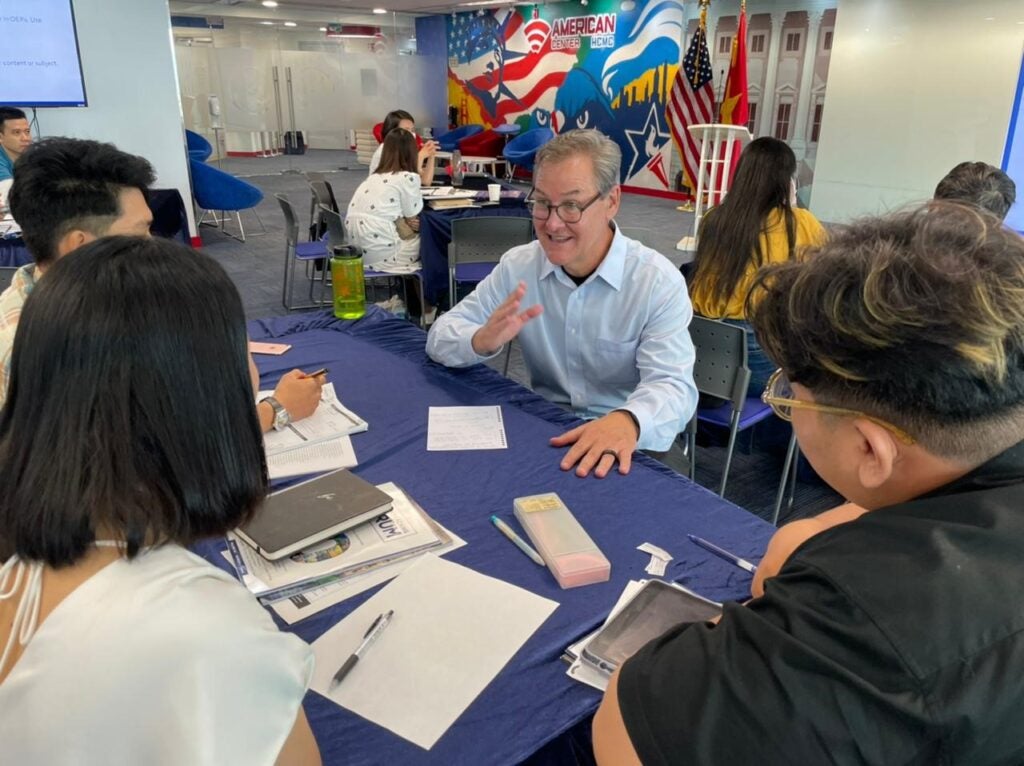
Marshall Jones (South Carolina) – Marshall G. Jones, an educator from Rock Hill, South Carolina, brings more than thirty years of expertise in learning design, educational technology, and open educational resources to his work as a professor and program director of the M.Ed. in Learning Design and Technology at Winthrop University, where he has served for over twenty‑five years and holds the endowed Singleton Professorship of Education. As an English Language Specialist in Vietnam in 2022, he delivered keynote addresses and led workshops across Nha Trang, Ho Chi Minh City, and Hanoi, introducing educators to open educational resources (OERs), guiding them in creating context‑appropriate materials, and strengthening online‑learning design through practical frameworks and curated repositories. In 2025 and 2026, Jones led a multi‑phase virtual initiative across Eastern Europe focused on Teaching English for STEM with AI and Innovation, guiding university ESP instructors through intensive cycles of instructional design, multimedia development, and collaborative problem‑solving. Participants produced nearly fifty AI‑enhanced open educational resources, a fully planned sixteen‑week university course on AI, and one of the region’s first institutional AI policies—tangible outcomes that expanded national capacity for English for Specific Purposes. Across all his engagements, Jones brings South Carolina’s commitment to educational technology, thoughtful design, and globally connected English language teaching to classrooms and professional networks worldwide.
Jenine Silen (South Carolina) – Jenine Silen, an educator from Anderson, South Carolina, blends her love of languages, literacy, and cross‑cultural learning in her work as a Virtual English Language Educator and as a teacher in Anderson School District Five. Originally from New York, she began her career as a middle and high school French teacher before earning a second master’s degree in Literacy and ESOL certification, which deepened her commitment to multilingual education. From 2023–2024, she served as a Virtual English Language Educator teaching Ukrainian university students in Kyiv and Nizhyn through a series of four‑skills Practical English courses, speaking clubs, and teacher‑training workshops that strengthened academic communication, classroom methodology, and cultural understanding. Her projects included leadership‑focused presentations, collaborative digital storytelling using Book Creator, and interactive exchanges connecting Ukrainian learners with peers living in the United States. In summer 2025, Silen was selected for the Virtual Educator Impact Exchange, a two‑week initiative that brought Virtual Educators and their international counterparts together in Washington, D.C. and at ISTELive 25 + ASCD in San Antonio. Through workshops, edtech showcases, and global networking, she helped highlight how technology expands access, builds community, and strengthens international partnerships. Silen’s work reflects South Carolina’s commitment to globally connected English language education.
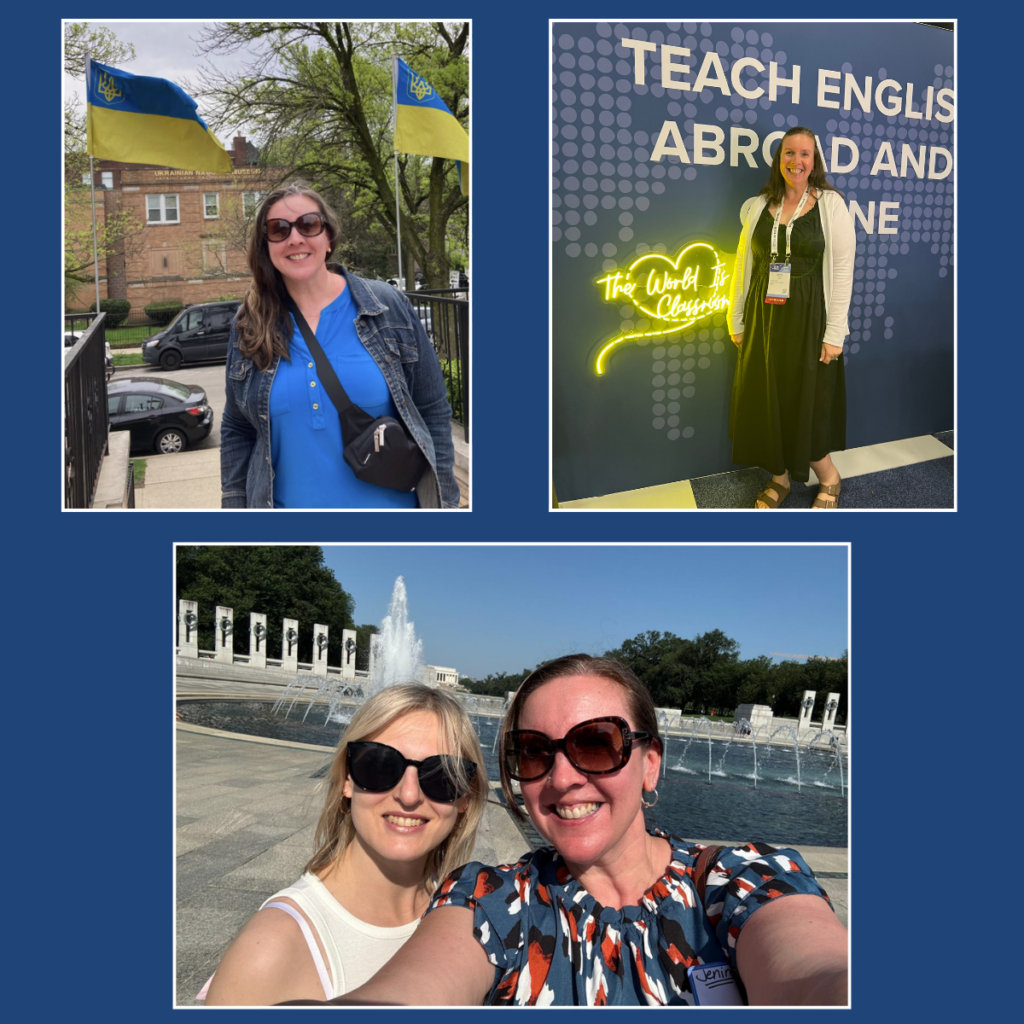
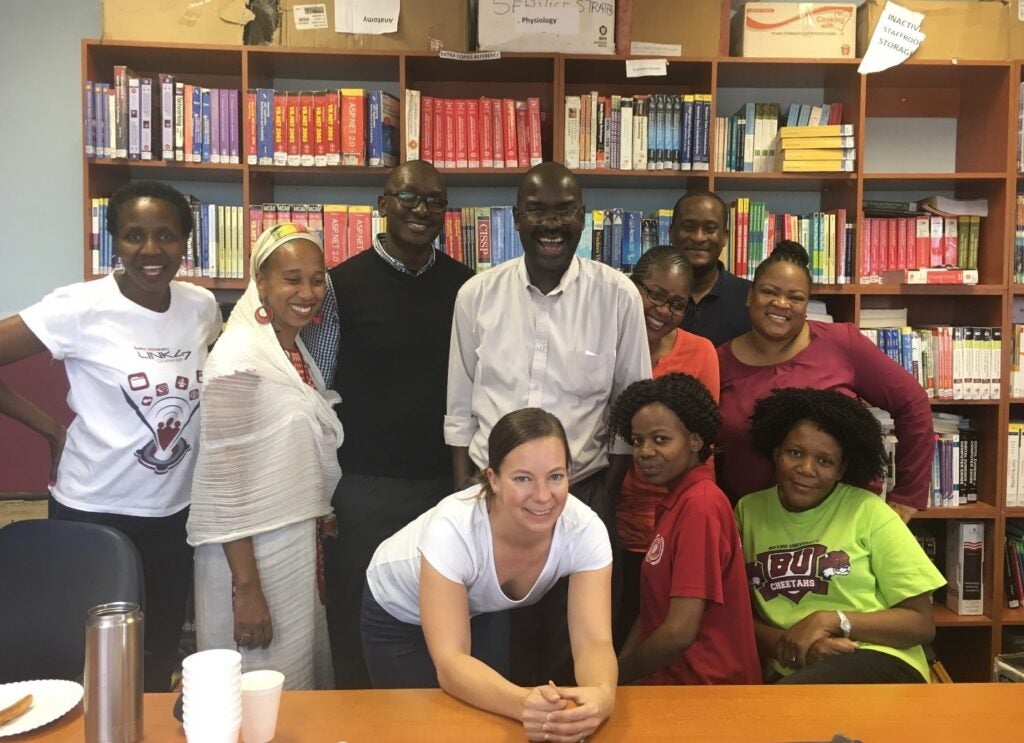
Marie van Romburgh (South Carolina) – Marie van Romburgh, an educator from Travelers Rest, South Carolina, brings more than a decade of global teaching and teacher‑training experience to her work at home and abroad. A graduate of the University of South Carolina, she taught English across Greenville County—including at Northwest Middle, Mauldin High, and Travelers Rest High—before becoming a communication skills instructor at Tri‑County Technical College in Pendleton. Her South Carolina classroom practice is shaped by extensive international experience: as an English Language Fellow in Burma and Botswana (2014–2018), she led professional‑communication seminars for ministry staff, facilitated 21st‑century‑skills workshops, and helped create a university Learning Commons that became a hub for student collaboration and debate. From 2022–2023, she served as an English Language Specialist for Poland, Lithuania, Latvia, and Estonia, directing a three‑phase Media Literacy for Educators initiative that equipped more than 100 teachers to integrate media literacy into their curricula, and design professional‑development programs for their home institutions. In 2026, she supported educators across Eastern Europe through interactive virtual programs that built communities of practice and strengthened communicative teaching. Across all her engagements, van Romburgh brings South Carolina’s commitment to informed, globally connected education to classrooms and teacher networks worldwide.
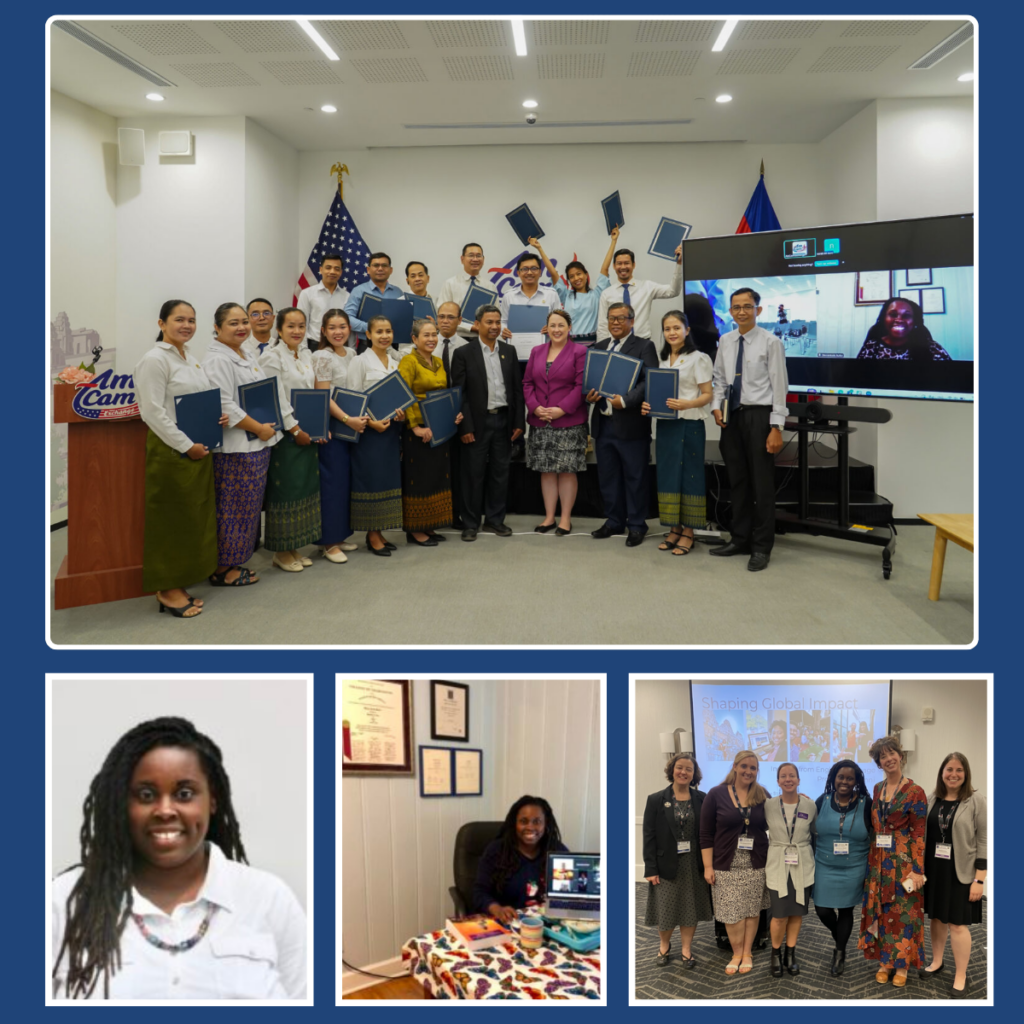
Sierra Nicole Ediger (South Carolina) – Sierra Nicole Ediger, an educator from South Carolina, brings more than a decade of experience across K–12, higher education, and adult learning to her role as a Multilingual Learner Program Specialist with Sumter School District. Her work at home is strengthened by international engagement that spans six countries and three continents, including service as a Virtual English Language Fellow in Nepal (2021–2022) and as a Virtual Educator in Cambodia (2025-2026). In Nepal, she partnered with American Spaces to lead a four‑month virtual Conversation Club focused on good governance, democratic values, and community engagement. Through needs‑based curriculum design and twice‑weekly sessions, she helped students strengthen their public‑speaking skills and express their ideas confidently in English, culminating in a series of student‑led presentations on topics of personal interest. Most recently, she led English Language Programs’ first Virtual Educator project in Cambodia, designing and facilitating two university‑level courses for teacher trainers at the National Institute of Education that deepened communicative methodology, digital literacy, and professional collaboration. Ediger also presented on her experiences as a Virtual Educator at the Carolina TESOL Conference, sharing insights from her work in Nepal and Cambodia with educators across the region. These global experiences enrich her work in South Carolina, where she supports multilingual learners, mentors teachers, and advances the state’s commitment to globally informed English language education.
Virginia Alumni
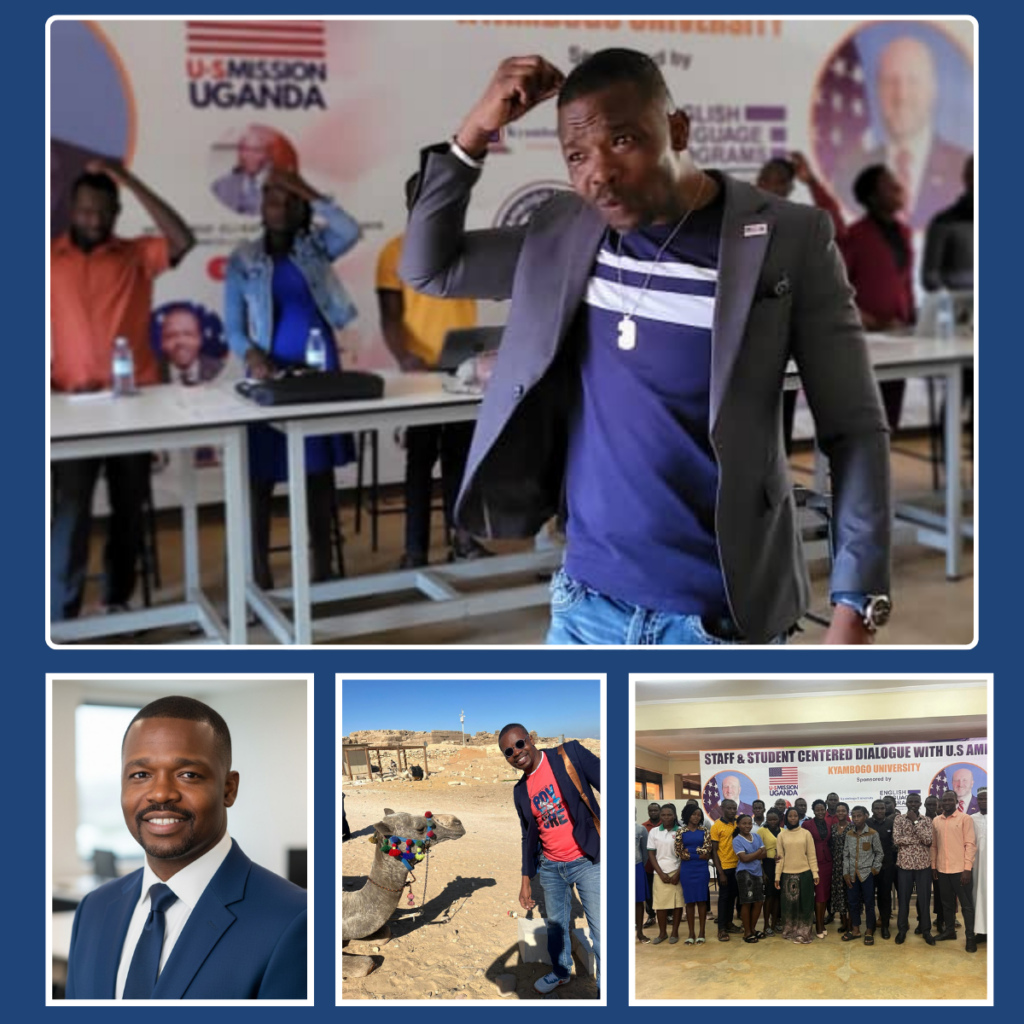
Bismark Agemble (Virginia) – Bismark Agbemble, an educator, author, and policy analyst with extensive experience in Virginia, has dedicated his nearly 15-year career to transforming global educational systems. Deeply rooted in the Commonwealth, Agbemble earned his B.S. in Economics from Virginia Commonwealth University in Richmond, served in the U.S. Air Force Reserves, and taught CTE courses in finance, marketing, and entrepreneurship for Richmond Public Schools. Currently a Liberty University doctoral candidate in educational leadership, he served as an English Language Fellow at Kyambogo University in Uganda from 2023 to 2025. During his fellowship, Agbemble modernized English instruction by embedding Content-Based Instruction and digital tools into teacher training. He spearheaded high-impact professional development forums, curriculum workshops, and a digital literacy boot camp that empowered over 50 students—notably inspiring students from rural areas to embrace technology. By training future educators on open-source educational software and Google Suite, Agbemble equipped Ugandan teachers with vital 21st-century skills to foster long-term student success, combat misinformation, and drive sustainable economic and educational development across the region.
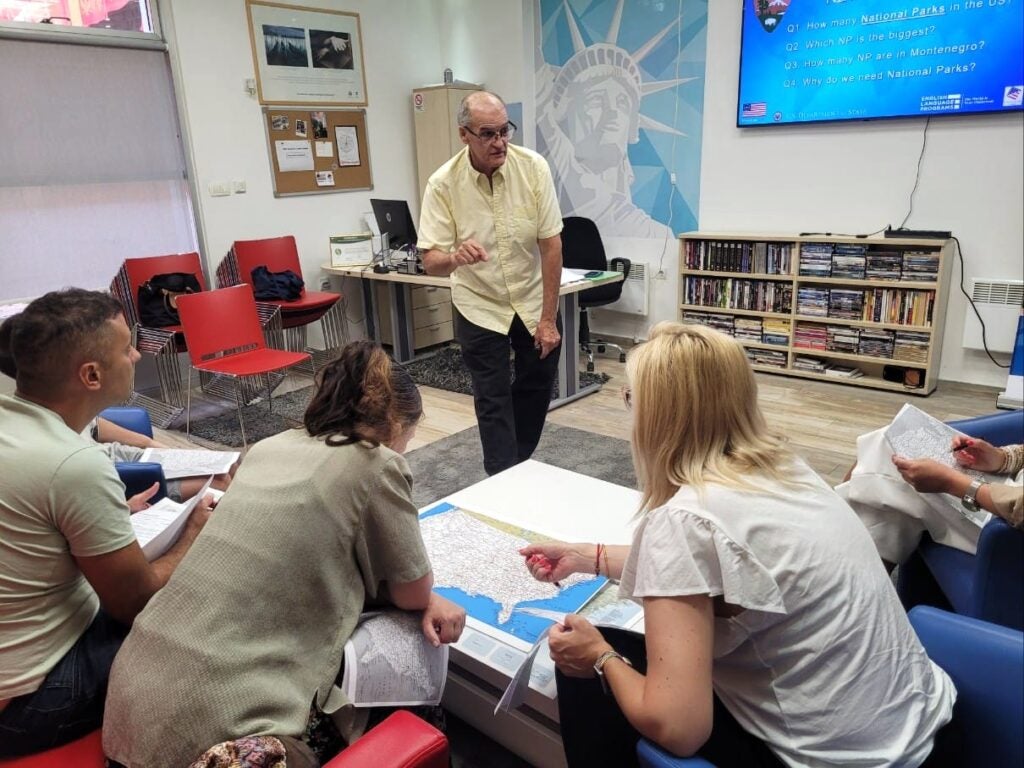
Scott Berlin (Virginia) – Scott Berlin, an educator with close professional ties to Virginia, brings more than twenty‑five years of international English‑language teaching experience to his work as an English Language Fellow in Montenegro. From 2025–2026, he served as an English Language Fellow at the University of Montenegro’s Faculty of Philology, strengthening English and English‑medium instruction through general English courses, ESP Business and STEM instruction, TESOL methodology training, and cultural programming at American Corners across the country. His fellowship also included high‑impact outreach such as business‑protocol sessions with AMCHAM North Macedonia and English Through Drama, a university‑wide project that developed students’ communication, presentation, and creative skills through monologues, role‑plays, and collaborative performances—culminating in three successful live shows at UCG Nikšić and the DODEST theater in Podgorica. Berlin’s career spans Korea, Japan, Kuwait, and extensive global travel, including directing an Intensive English Program and authoring ESL textbooks that blend photography, video, and instructional design. A former Global Engagement Coordinator at Old Dominion University, Berlin is now based in his hometown of Seattle, where he continues to create materials and pursue photography while modeling curiosity, creativity, and global understanding as essential elements of great teaching.
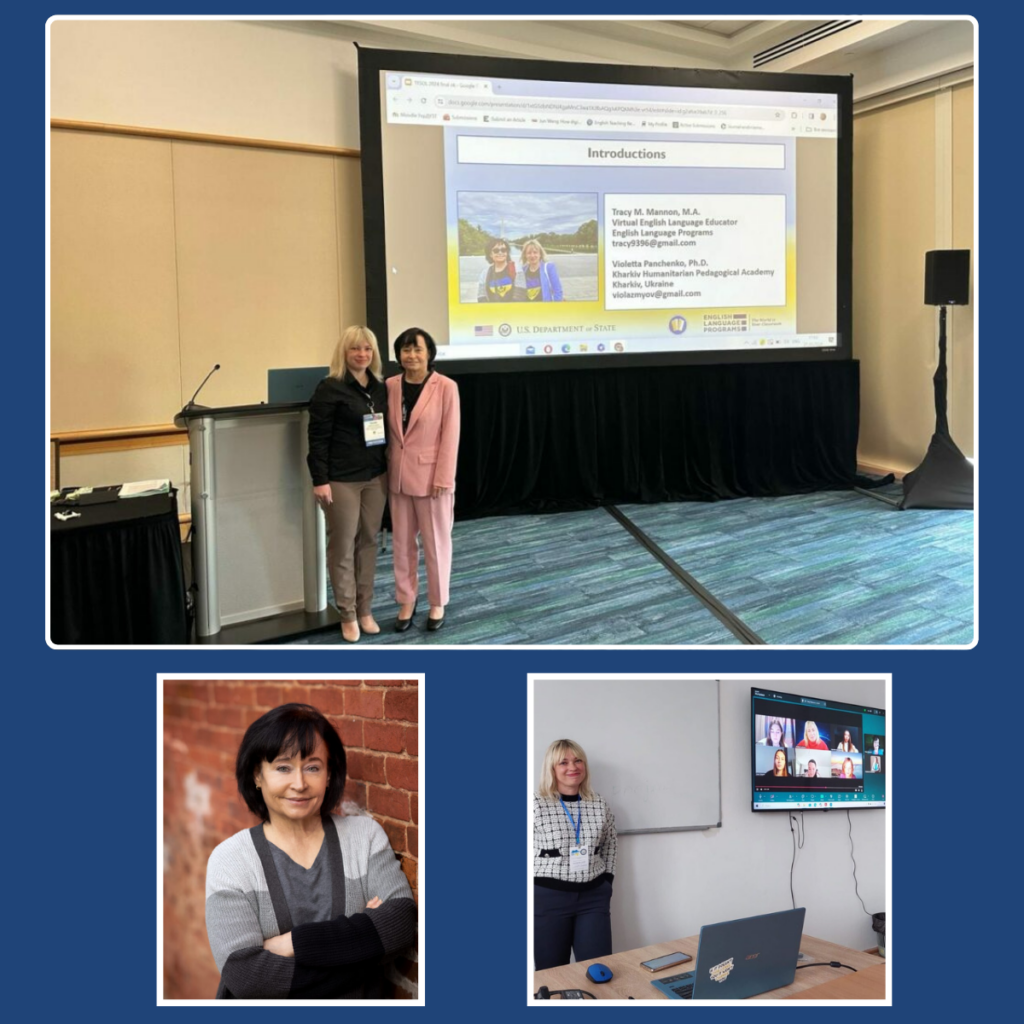
Tracy Mannon (Virginia) – Tracy Mannon, an educator with extensive experience in Virginia, dedicated over two decades to multilingual learners as an ESOL specialist and lead teacher with Fairfax County Public Schools. Drawing from her background in K–12, adult, and university‑level instruction, Mannon served as a Virtual English Language Educator in Ukraine from 2022 to 2024, providing vital instruction, cultural exchange, and holistic academic guidance to university students and faculty navigating the severe disruptions of wartime. Even after her virtual assignment ended, she continued her impact through co‑authoring articles with Ukrainian colleagues, delivering professional development webinars, and presenting at national and international TESOL conferences. Mannon actively introduced Ukrainian educators to innovative 60‑second strategy videos and open‑source materials to streamline classroom preparation under high‑stress conditions. By co‑creating Readers Theater frameworks with her university host, Violetta Panchenko, and mentoring teachers through the TESOL‑Ukraine Mentorship Program, she has fostered resilient educational communities, built lasting cross‑cultural connections, and championed student‑centered language instruction for learners and fellow educators across Virginia, Ukraine, and around the globe. Mannon now makes her home in Shepherdstown, West Virginia, where she continues to support educators and learners with the same commitment to collaboration, creativity, and global understanding.
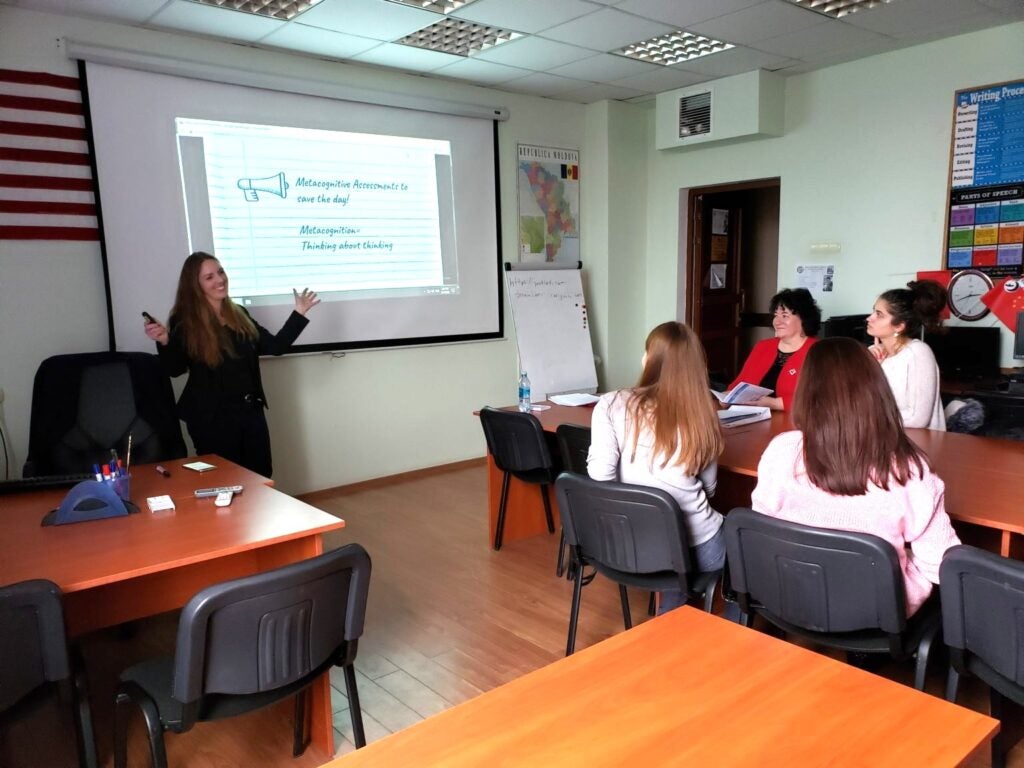
Danielle Aldawood (Virginia) – Danielle Aldawood, an educator from Fairfax, Virginia, brings twenty years of ESOL and ELL teaching experience to her international work as an English Language Fellow in Bahrain and Moldova. She first served in Moldova in 2019 as an in‑person English Language Fellow, contributing to national conferences, leading multi‑session workshops at Comrat State University, and supporting educators through interactive digital platforms. During the COVID‑19 pandemic, Aldawood continued her work as a Virtual English Language Fellow from 2020–2021, developing teacher‑training workshops, creating an OER‑based Intercultural Communication course for graduate students, and delivering practical sessions on vocabulary review, grammar assessment, technology tools, and curriculum design for teachers across Moldova. In 2022, she served as an English Language Fellow in Bahrain, working with Bahrain Teachers College to strengthen English‑language teaching and academic program management and leading hands‑on professional development at the Arab Open University for more than thirty teachers from public and private institutions. Aldawood holds a B.A., multiple master’s degrees, and a Ph.D., reflecting her deep commitment to advanced study and professional growth. She previously taught at the Community College of Baltimore County and George Mason University and served as Senior Manager at LinkVisum Consulting Group. She now serves as a Foreign Service Officer with the U.S. Department of State.
West Virginia Alumni
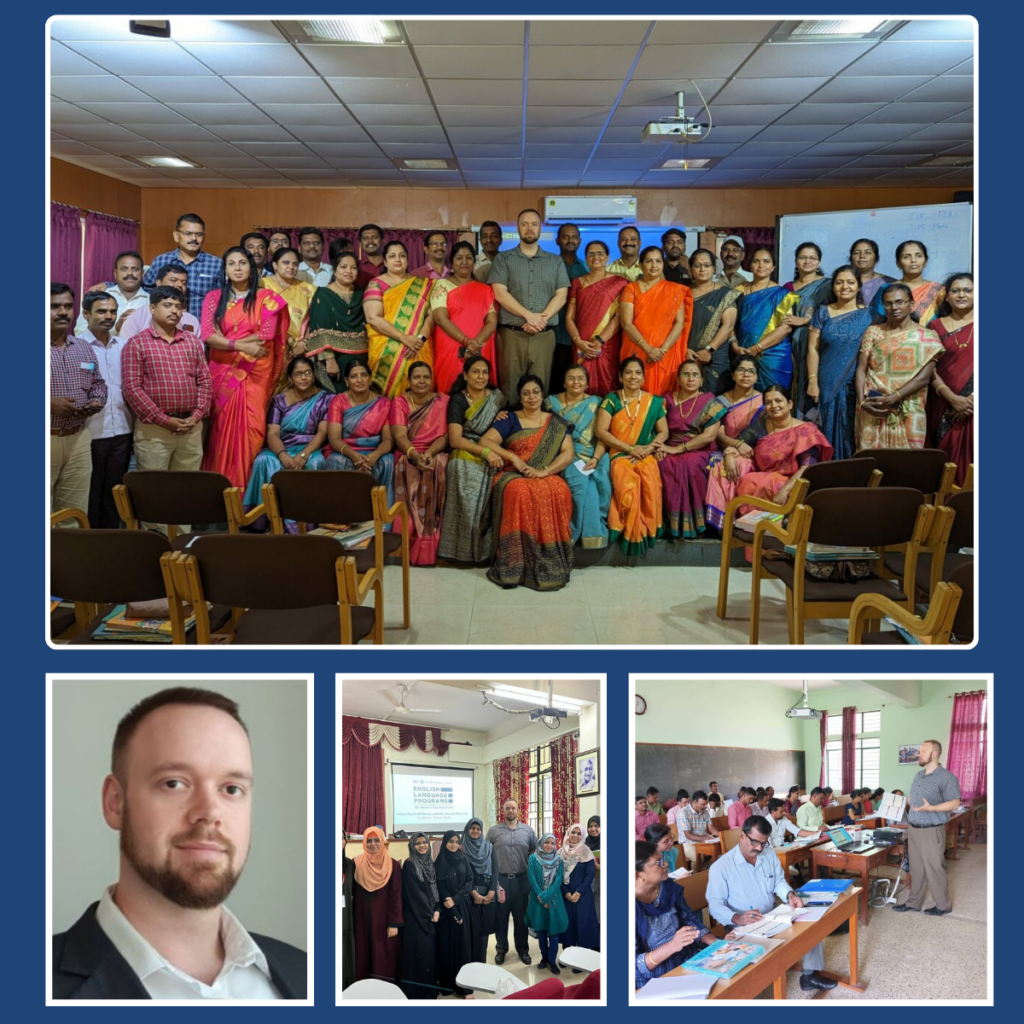
Tristan Hicks (West Virginia) – Tristan Hicks, an educator and Foreign Service Officer raised in the Appalachian Mountains of West Virginia, brings extensive international teaching, university leadership, and cross-cultural expertise to his work. Holding an M.A. in History from West Virginia University, he leverages his deep educational background—from early tutoring to leading graduate programs in Uzbekistan—to foster communicative, student-centered learning environments globally. Hicks served as an English Language Fellow in India from 2022 to 2023 and in Kosovo from 2023 to 2024. In India, he trained over 160 educators, taught public policy communication at MIT-WPU, and participated in the National Legislators’ Conference alongside 1,400 leaders. In Kosovo, at the University of Prizren, Hicks delivered specialized language instruction, led regional workshops for Fulbright scholars, and advanced community initiatives through American Corner Prizren. His work generated significant impact by strengthening university accreditation and equipping future policymakers. Hicks continues his dedication to international diplomacy, educational access, and cross-cultural exchange, enriching public service initiatives and global academic communities worldwide.
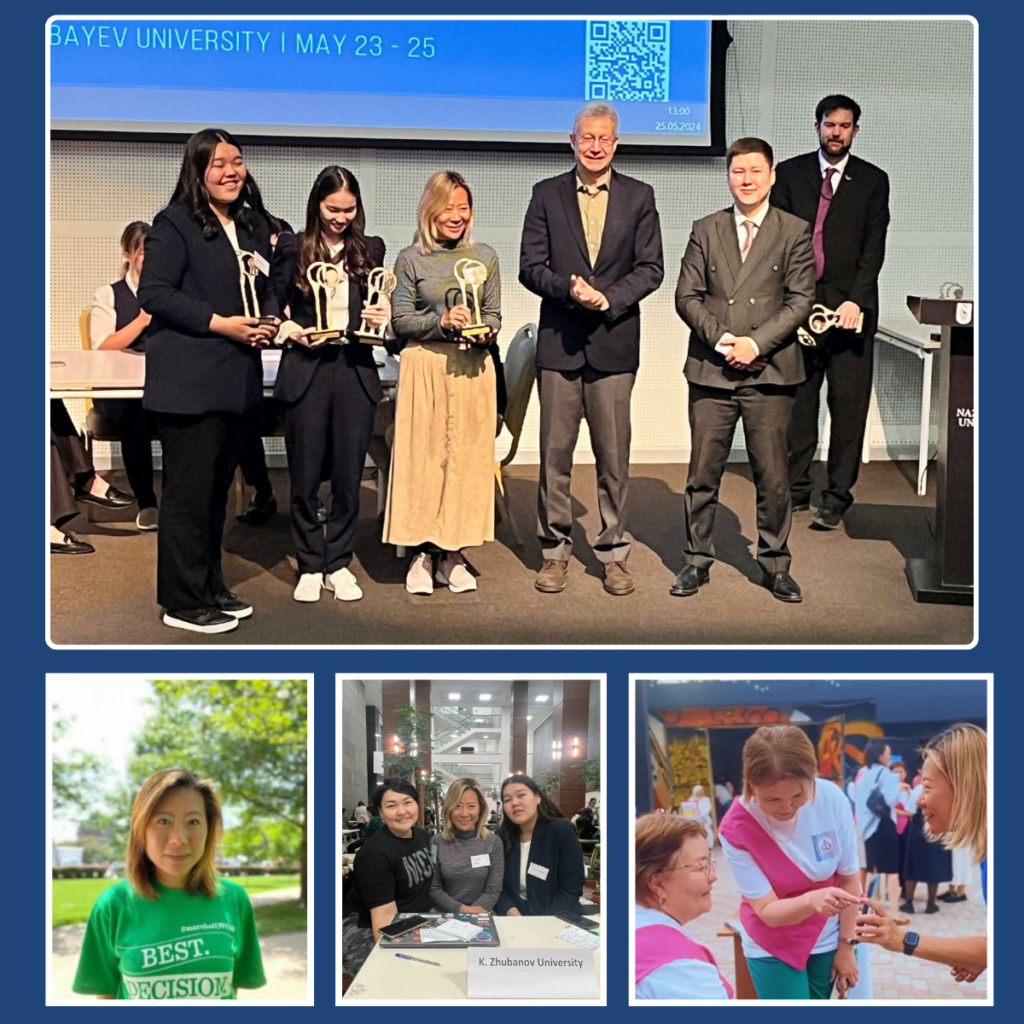
Vipavee (Kae) Bradley (West Virginia) – Vipavee (Kae) Bradley, an educator and communication faculty member with experience in ESL based in Barboursville, West Virginia, brings extensive expertise in cross‑cultural communication, language instruction, and international programming to her work. An instructor in the Department of Communication Studies at Marshall University, she leverages her experience in international education to foster global connections and student‑centered learning environments. From 2023 to 2024, Bradley served as an English Language Fellow in Kazakhstan, hosted primarily at K. Zhubanov University in Aktobe. Her fellowship encompassed high‑impact initiatives, including leading teacher‑empowerment workshops, conducting source‑evaluation training, participating in regional debate competitions, and co‑facilitating English Access Scholarship Program summer camps. Bradley’s project generated significant impact by establishing a historic Memorandum of Understanding between K. Zhubanov University and Marshall University, culminating in joint virtual exchanges and the arrival of Kazakh exchange students to West Virginia in Fall 2024. Bradley continues her commitment to global educational exchange, academic collaboration, and cross‑cultural dialogue, enriching learning communities across West Virginia and internationally.
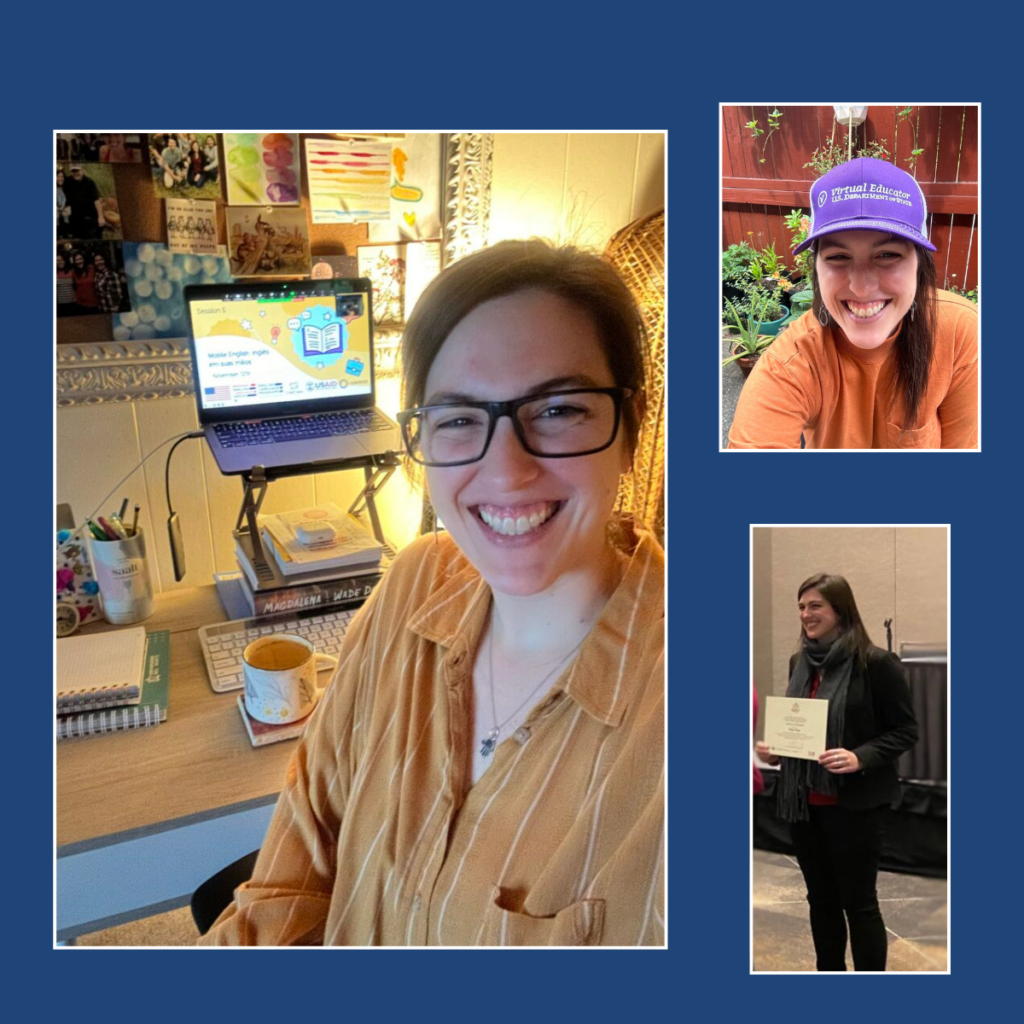
Paige Poole (West Virginia) – As an education and technology specialist, Paige Poole brings eighteen years of international teaching, curriculum design, and program leadership across four countries to her work. Holding an M.A. in TESOL Studies, she leverages her dedication to innovative pedagogy and community building to foster supportive, student‑centered learning environments globally. From 2022 to 2023, Poole served as a Virtual English Language Educator in Brazil from her home office in Morgantown, West Virginia, where she designed and delivered two specialized mobile‑based language projects. Tailored for adult learners in remote areas of the Amazon, her courses integrated messaging platforms with localized English for Specific Purposes content focused on professional communication and skill development. Poole’s initiative generated significant impact by connecting students directly with international guest speakers, presenting her methodologies at the TESOL 2023 International Convention, and empowering historically excluded populations to engage on global platforms. Now based in Pittsburgh, Poole serves as a Senior Account Executive at Brisk Teaching, advancing AI‑driven educational solutions and empowering teachers worldwide.
Rachel Propst (West Virginia) – Rachel Propst, an educator based in Clarksburg, West Virginia, brings over seven years of dedicated teaching, library instruction, and English language specialization to her work. Holding a B.A. in English and an M.Ed. from West Virginia University, she leverages her deep Appalachian roots and experience as an EL Specialist for Harrison County Schools to champion holistic, student-centered learning. In 2024, Propst served as a Virtual English Language Educator in Burma, hosting an intensive academic writing course with Spring University Myanmar. Grounded in research methodologies and global outreach during ongoing civil disruption, her project provided vital instruction and professional guidance to students seeking international higher education and research opportunities. Propst’s initiative generated significant impact by equipping learners to design research infographics, navigate international conferences, and present their work on global platforms, leading directly to student participation in international academic symposiums. Drawing from her service on the West Virginia TESOL conference planning committee, she consistently connects local and global learners to academic opportunities. Propst continues her commitment to writing and language instruction, enriching classrooms across West Virginia and around the world.