
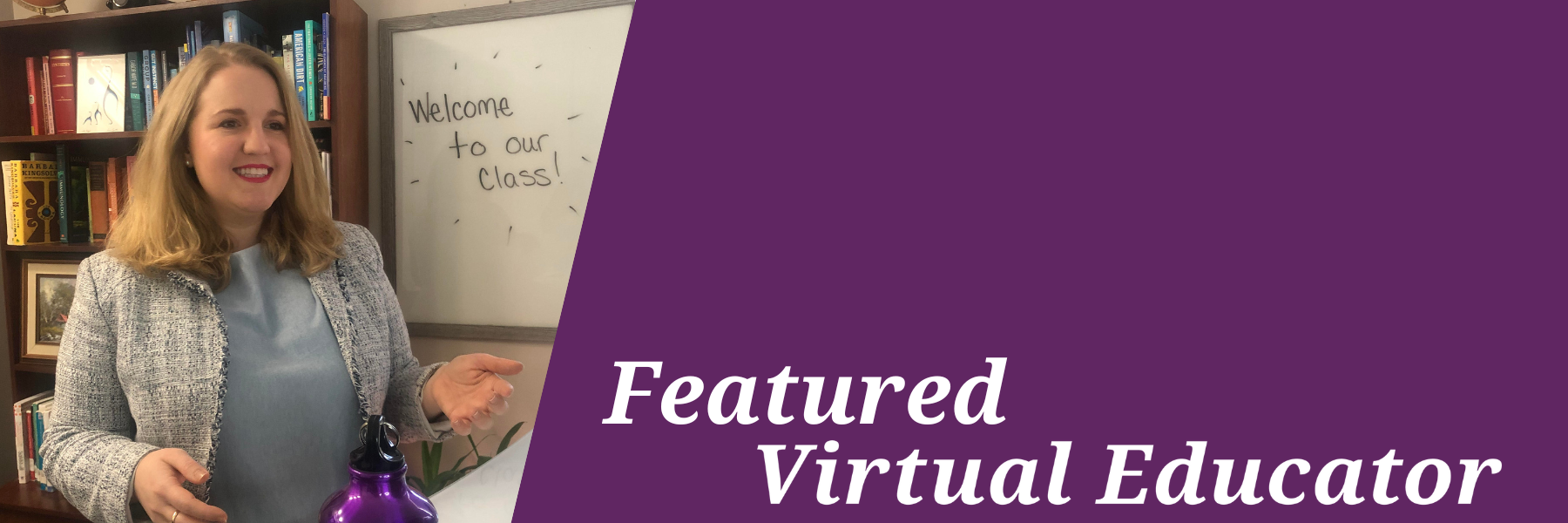
Throughout multiple teaching assignments spanning regions from Eastern Europe to the Middle East, Virtual English Language Educator Kelsey Ulrich-Verslycken partnered with institutions around the globe, including the U.S. Consulate in Iraq and the Creativa Center in Egypt. Her projects encompassed university level and professional education, from computer science classrooms to business environments. Through her English for Specific Purposes (ESP) focused courses, Ulrich-Verslycken contextualized language instruction to the needs of learners while building interpersonal connections through task-based learning and cultural explorations.
“It has been one of the most rewarding and impactful experiences of my life,” she said, reflecting on her time in the Virtual Educator Program. “My only regret in the program is the two-year term limit—though I know that having this limit will ensure that others will get the opportunity for the same level of personal and professional development.”
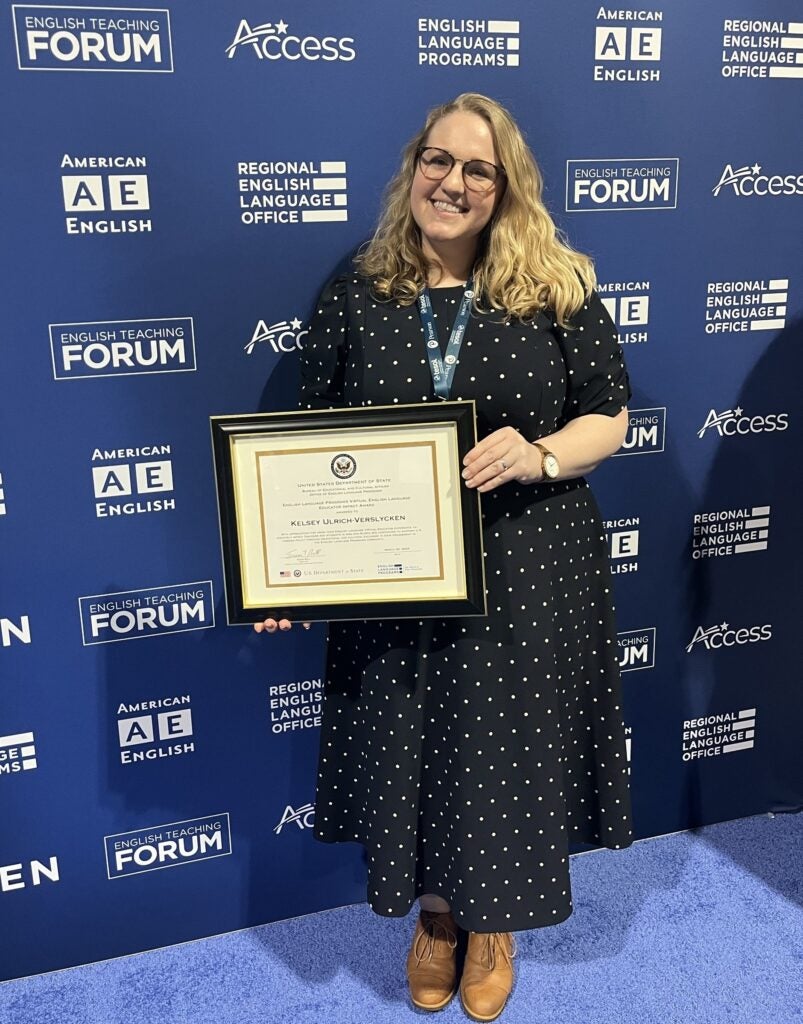
Earlier this year, Ulrich-Verslycken received the Virtual English Language Educator Impact Award in recognition of her teaching success and continued support of U.S. foreign policy through educational and cultural exchange.
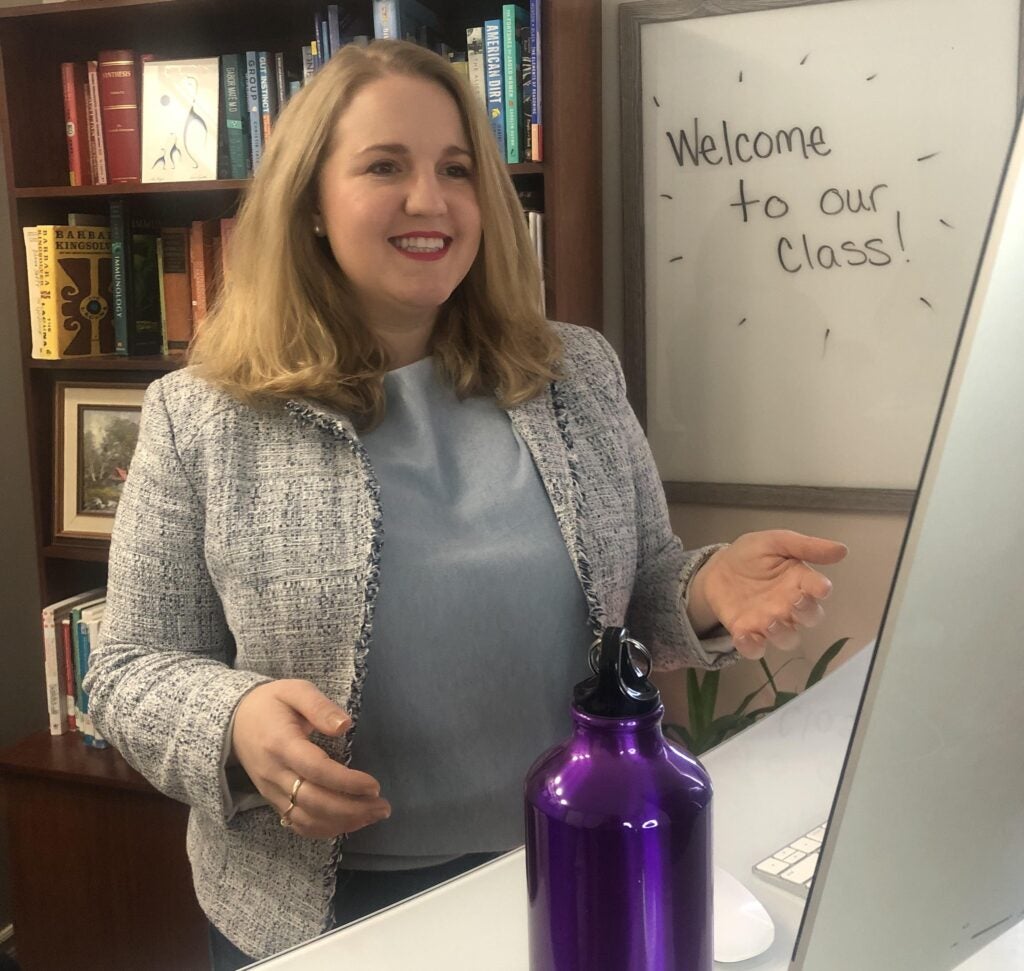
ESP from Tech to Finance
It has been one of the most rewarding and impactful experiences of my life.
Ulrich-Verslycken’s TESOL specialization in English for Specific Purposes (ESP) proved particularly relevant to her Virtual Educator assignments, which required her to create targeted curricula for learners with professional and academic goals. In Russia, she taught a university-level English for Computer Science course for students and their professors, followed by a separate project training educators to apply artificial intelligence tools in the classroom. The following academic year, in Egypt, she helped pilot an English for IT Engineering course for adult professionals working in tech and engineering sectors. These learners required support with industry-specific terminology and functional communication skills, such as presenting projects, writing reports, and participating in meetings in English.
Her final project, based in Iraq, involved designing and delivering an English for Finance course for business and government professionals. The course focused on vocabulary and discourse related to finance, banking, and entrepreneurship, and included discussions on topics such as business ownership, investment strategies, and economic development. Many of the participants were entrepreneurs looking to expand their language skills in order to navigate global business environments.
“I was able to draw from foundational principles in ESP: context-specific needs analysis, contextualized vocabulary, authentic materials, and learning outcomes that prioritize professional skills development through the target language,” she explained. Across each context, she tailored lessons to reflect both the linguistic needs and the occupational realities of her participants. Her instructional approach emphasized flexibility and responsiveness, shaped by the specific industries, goals, and expectations of the learners she worked with.

Collaborative Dynamics in Virtual Classrooms
A common challenge in global virtual education is building classroom rapport across not only physical but also cultural distance. Ulrich-Verslycken treated that challenge as one of bridging the gap. Even in professionally focused courses, she incorporated time for learners to informally engage in speaking practice by talking about their families, hobbies, and experiences. This created familiarity and connection alongside the structured learning of meeting professionally-oriented coursework objectives.
“Because these teaching contexts are often populated with students who may or may not know each other, as well as me coming in as a complete stranger, it was important to me to take time every class to talk about families, hobbies, interests, travelling,” she said. This approach led to tangible results. Participants stayed in touch outside of class, met up in person, and formed both personal and professional bonds.
“I felt that it showed how valuable it was to take the time to build these personal relationships,” she added.
Technology Adoption and Instructional Strategy
The preparation for this course led to many weeks of finding and playing around with applications, considering their pedagogical merit, and thinking creatively about how teachers could incorporate them into the classroom.
Ulrich-Verslycken’s projects also expanded her use of educational technology. In one intensive six-week teacher training course, she led sessions on incorporating AI and other emerging tools into classroom practice. Preparing for that project changed how she approached instructional design in her own work.
“I was always reluctant to incorporate many of the emergent EdTech and AI-based programs,” she noted. “The preparation for this course led to many weeks of finding and playing around with applications, considering their pedagogical merit, and thinking creatively about how teachers could incorporate them into the classroom.”
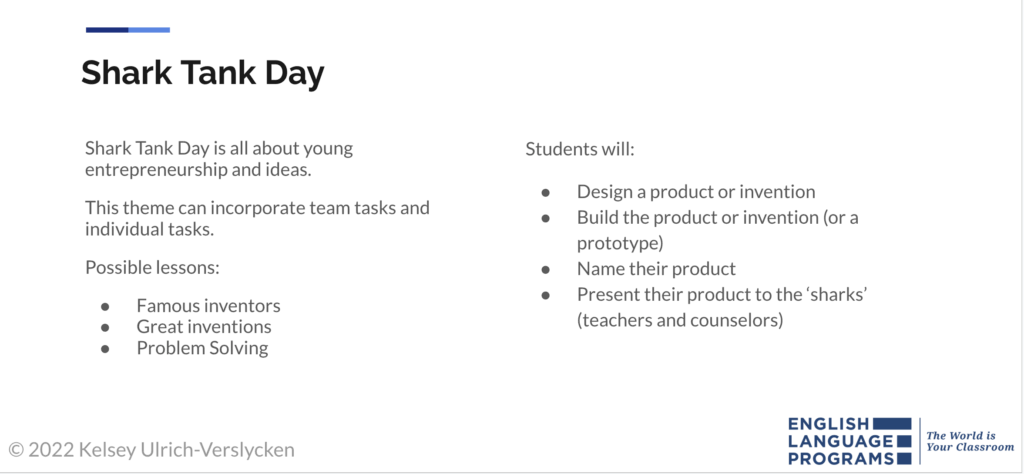
Her classes prioritized communicative language teaching and task-based learning, adapted for a wide range of proficiency levels. She used collaborative tools like Google Docs, digital whiteboards, and platforms such as Kahoot and Flipgrid. These tools enabled both learner interaction and content creation.
Cultural Perspectives in Context
It’s not just about supporting local businesses but about giving back to your community and hometown pride.
While Ulrich-Verslycken’s courses often focused on the language of specific industries, cultural learning emerged naturally from classroom discussions. In Iraq, while teaching financial professionals and entrepreneurs, a lesson on local business practices turned into a memorable exchange of regional values.

Drawing on her background in Alaska, she introduced a lesson using photos and prompts about supporting local agriculture and small business. Her students, who had not heard of similar initiatives in their region, were surprised and curious to learn that comparable movements existed nearby.
“To me, the Alaska Grown perspective is so close to my heart. It’s not just about supporting local businesses but about giving back to your community and hometown pride,” she said. “This lesson made me feel so connected with my students, that we could share our love of our respective homes with similar values.”
These moments, she observed, occurred across teaching contexts. From lessons on finance to technology, discussions would surface about wealth-building, property ownership, and generational priorities. These topics reflected not only economic systems of management and development but a rich tapestry of cultural frameworks.

Kelsey Ulrich-Verslycken started her English language teaching journey in 2013 by teaching kindergarten in South Korea. Although she didn’t have formal teacher training at the time, she immediately fell in love with working with people and helping them grow in their education. She completed her M.A. in Applied Linguistics with the University of Massachusetts, Boston in 2016 and since then has focused on postsecondary language education. She is currently finishing her PhD in Applied Linguistics and Discourse Studies with Carleton University in Canada. Her research interests are teacher education, corrective feedback, classroom dynamics, task-based language teaching, and willingness to communicate.