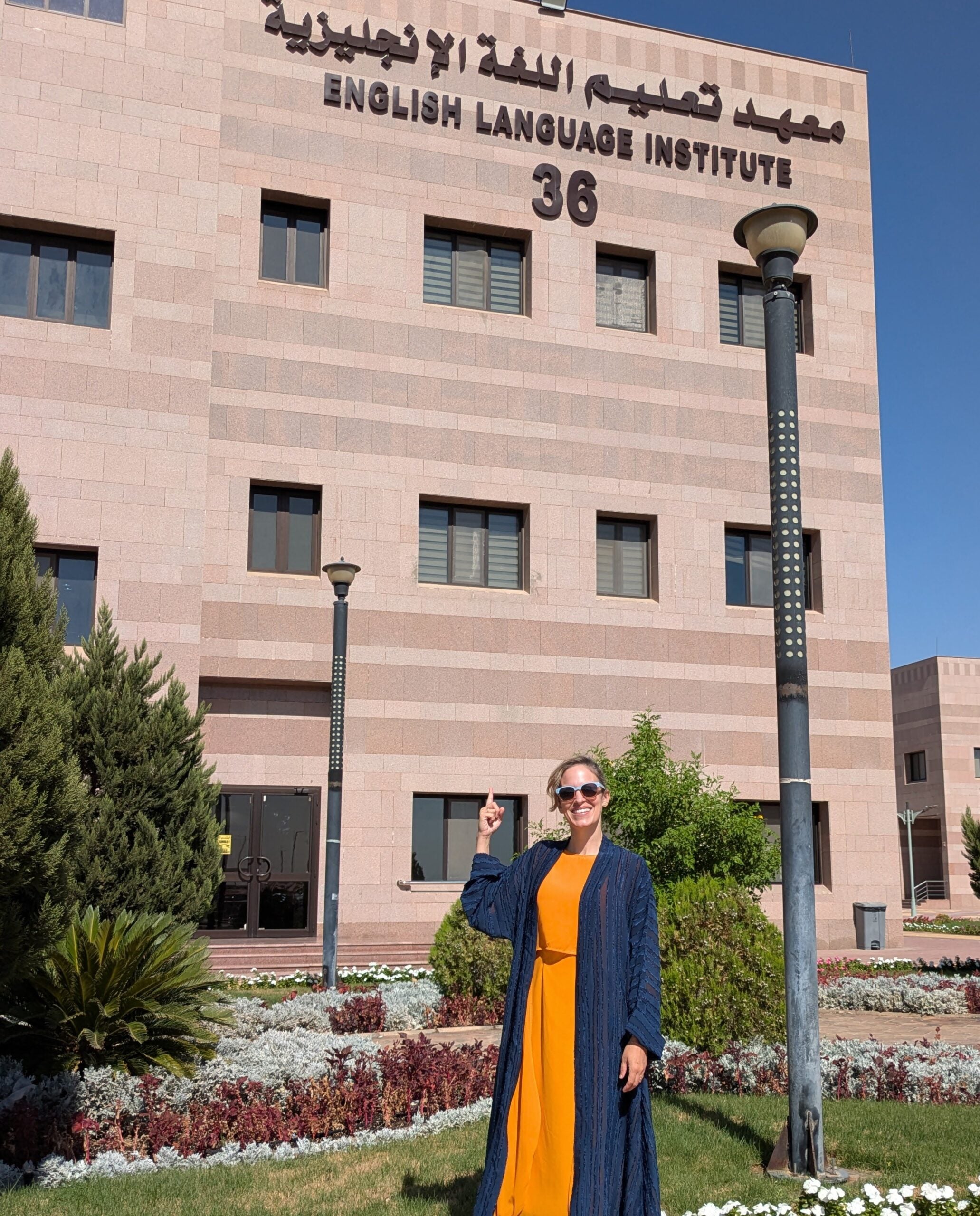
When English Language Specialist Katie Callahan Neginskiy arrived at the University of Tabuk’s English Language Institute (ELI), she stepped into one of the most ambitious AI‑integration initiatives underway in Saudi Arabia. Established in 2012, the ELI serves nearly eight thousand foundation‑year students and is staffed by two hundred English language instructors, all with advanced degrees and extensive experience teaching both General English and English for Specific Purposes. As generative AI tools rapidly expand across Saudi Arabia’s educational landscape, the ELI sought expert guidance to help its teachers use AI responsibly, ethically, and effectively.
Over an intensive two‑week period, Callahan Neginskiy designed seven customized training modules and delivered eleven workshops for six hundred eighty‑six participants, including English language teachers, curriculum coordinators, and students from healthcare, engineering, and tourism tracks. Her project, Enhancing Language Learning Using Generative AI, equipped educators with practical strategies they could apply immediately in their classrooms.
“I wanted teachers to leave each session with something they could use the very next day,” she explained. “Not just ideas — but workflows, prompts, lesson plans, and confidence.”
This initiative positioned the United States as a partner of choice for AI training and best practices, supporting educational objectives and opening doors to future U.S.–Saudi collaboration in education and technology.
Meeting Teachers Where They Are
Although ELI instructors are highly qualified and experienced, their familiarity with AI ranged widely. Some had experimented with generative tools, while others had never opened an AI platform. To bridge this gap, Callahan Neginskiy designed workshops that were practical, accessible, and intentionally low‑pressure. She emphasized simple classroom applications rather than technical jargon, demonstrating how AI could support lesson planning, feedback, differentiated instruction, and ESP materials development.
Her approach centered on reframing AI as a support tool rather than a replacement for teachers. She reminded participants that effective teaching still depends on human relationships, instructional judgment, and cultural understanding. AI could reduce workload and spark ideas, but teachers remained central to the learning process. As she continued working internationally, she increasingly focused on adaptable strategies rather than reliance on any single platform, especially in contexts where access to online tools may change frequently.
Transforming Teaching Practices Across the Institute
Across the workshops, teachers reported a dramatic shift in mindset. AI became practical, manageable, and genuinely useful. Participants began using it to create leveled reading materials, generate speaking prompts, build question banks, provide individualized feedback, and adapt materials for students with different proficiency levels. Faculty in healthcare, engineering, and tourism were especially enthusiastic about the possibility of creating specialized English materials tailored to their disciplines.
By the end of the project, teachers felt confident designing English language activities that incorporated AI for personalized learning, integrating AI‑driven exercises while maintaining the human element of teaching, and assessing student progress using AI‑powered feedback. They also learned how to adapt AI tools specifically for ESP contexts, a skill that aligned closely with the university’s academic priorities.
One of the most meaningful outcomes was the creation of a WhatsApp Community of Practice. The group quickly became an active space where teachers across campuses asked questions, shared resources, and supported one another. This peer network extended the project’s impact far beyond the initial training period and created a foundation for continued professional growth.
“This project was both exciting and deeply meaningful for me,” she reflected. “I left inspired by the creativity and commitment of the educators and students, and I am eager to see how they continue to adapt AI for their own contexts.”
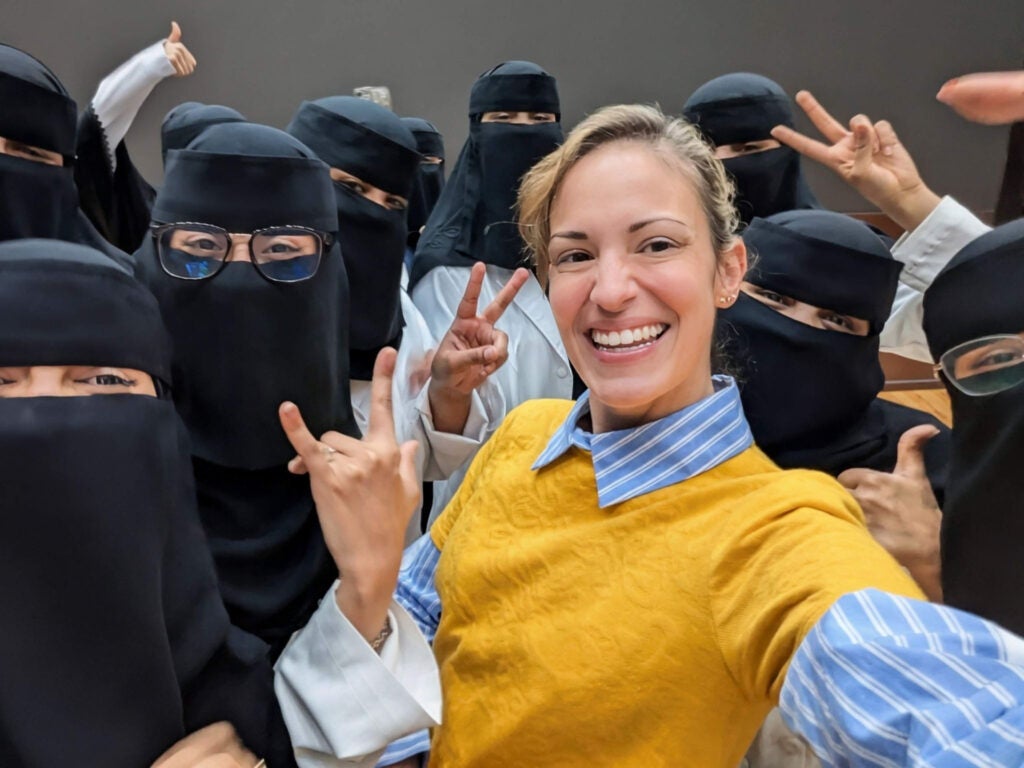
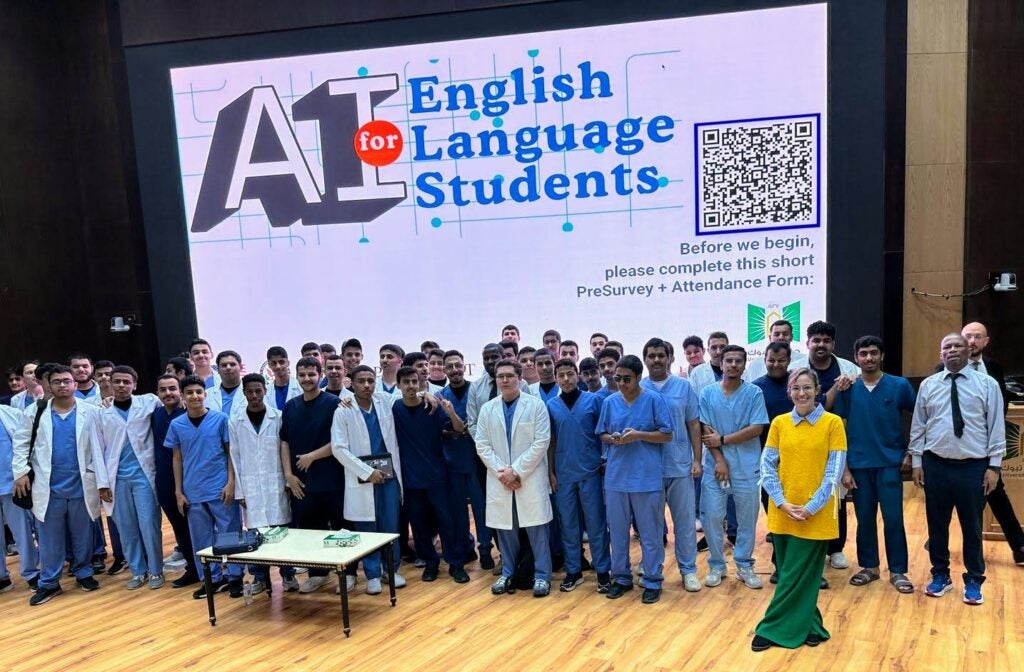
Callahan Neginskiy taking a photo with female medical students (left) and male medical students (right) after the presentation
Hospitality in the Desert
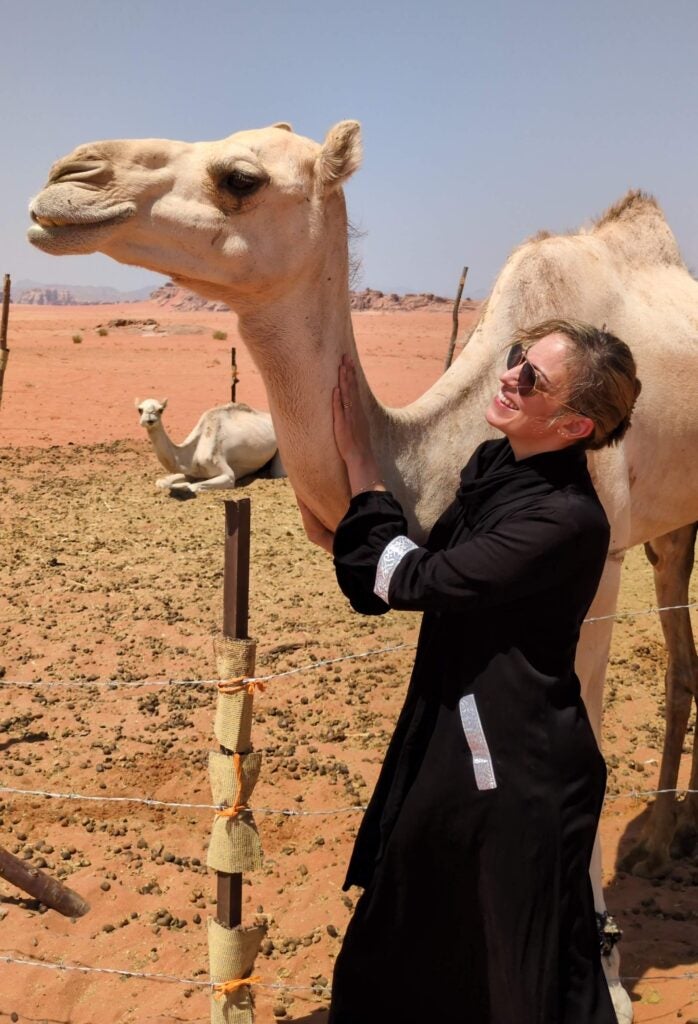
One of her most memorable experiences in Tabuk began with a simple question: could she see a camel while in Saudi Arabia? Her colleagues laughed warmly and assured her that camels were everywhere. After their conversation wrapped up, they offered to take her just outside the city to see them. A short drive into the desert brought them to the first herd they encountered. They spoke with the herder and asked whether she could spend time with the camels, and his response was immediate and welcoming.
What followed was a moment of profound hospitality. The herder offered her cold camel’s milk, invited her to try milking a camel, and even offered her the chance to ride one. The interaction felt natural and effortless, and it reflected the warmth she encountered throughout her time in Saudi Arabia. During her stay, she visited several herds, each experience marked by the same generosity and openness.
Daily Life in Tabuk
During her in‑person project, Callahan Neginskiy stayed in a large, beautifully decorated hotel on the University of Tabuk campus. The hotel was remarkably quiet, and she later learned that a member of the regional royal family lived on the top floor. Her days began with breakfast — fresh vegetables, cheeses, olives, salads, breads, and American‑style coffee — before a professor picked her up and drove her to whichever building she was presenting in that day. Although the buildings were close, the intense heat and lack of sidewalks meant people rarely walked between locations.
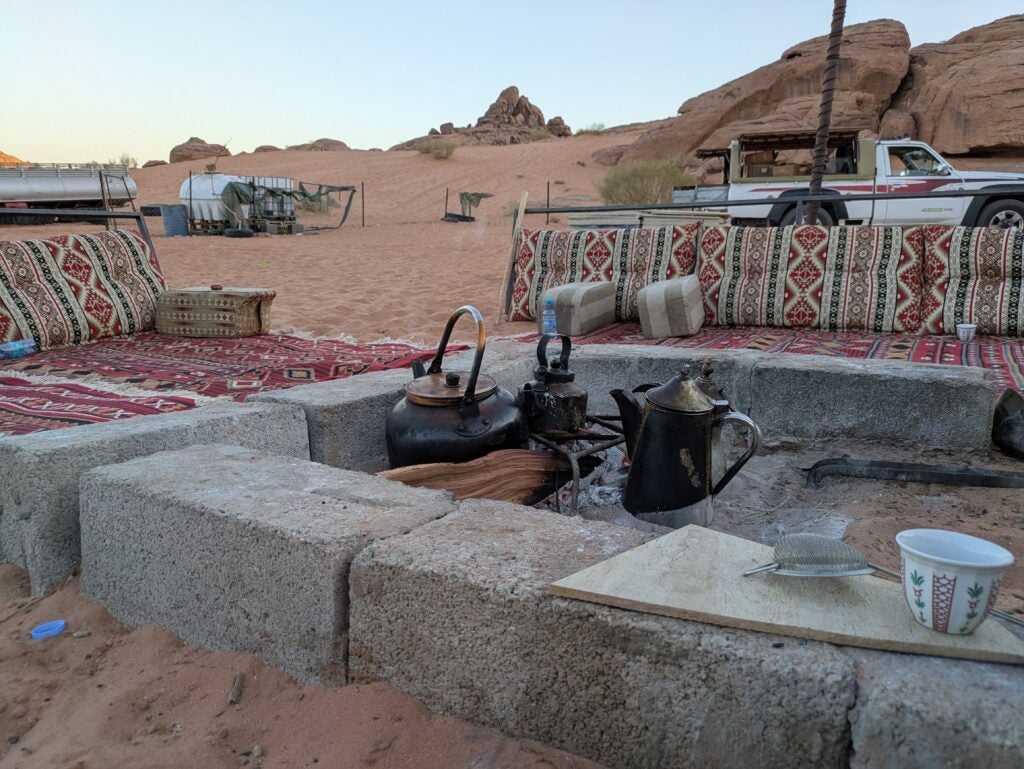
Her workdays followed a steady rhythm: a morning workshop, lunch, and an afternoon session for teachers who had morning teaching responsibilities. In the evenings, she often shared meals with colleagues. After trying Italian and American‑style restaurants, she asked to try traditional Saudi food and quickly fell in love with kabsa, a fragrant rice dish made with spices and meat. One evening, she and her colleagues drove into the desert to eat kabsa cooked underground in the sand. Prepared with camel meat, the dish had an incredibly rich, smoky flavor. Sharing that meal under the desert sky became one of the most meaningful cultural experiences of her time in Tabuk.
Connecting Across Cultures
Callahan Neginskiy connected deeply with Saudi culture through daily interactions with colleagues, many originally from Syria and Sudan. Her long experience working with international communities made these conversations especially meaningful, offering insight into regional migration, education, and professional life in the Gulf. She delighted in learning small aspects of Arabic language and culture, noticing the rhythm of daily life: families staying out late into the night, quiet streets during the heat of the day, and the tradition of evening coffee shared among friends and relatives.
Weekend trips allowed her to explore the region more fully, including a visit to Maraya, the world’s largest mirrored building, and learning about the NEOM development project, an ambitious initiative focused on futuristic city planning. Sharing American culture in Tabuk felt different from other countries where she had worked. With less visible American cultural influence, cultural conversations became more intentional and thoughtful. She brought small gifts — pumpkin spice candles and handmade hummingbird ornaments — which sparked lively discussions about everyday American life, regional traditions, and shared values that resonate across cultures.
Professional Growth and Future Directions
This Specialist experience significantly strengthened Callahan Neginskiy’s expertise in ethical AI integration, teacher training, and international education. Working with teachers from multiple disciplines pushed her to design AI training that was contextualized, practical, and immediately useful. The project reinforced the importance of designing professional development that is adaptable and grounded in real teaching needs. It also deepened her understanding of how cultural context shapes educational technology adoption, reminding her that successful international exchange requires listening, trust‑building, and adapting ideas to local realities.
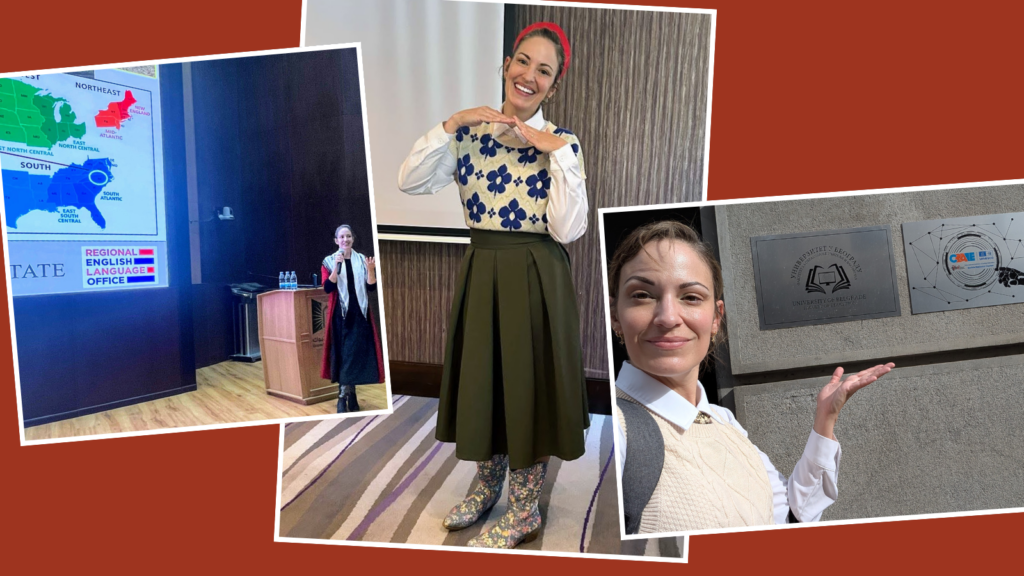
Her work in Saudi Arabia is part of a broader arc of international engagement that continues to shape her professional growth. As a Specialist, she has also facilitated training in Eastern Europe, including a multi‑day workshop in Belgrade where instructors surprised her with a kokoshnik during a cultural exchange activity — a moment that captured the warmth and connection that often emerge in English Language Programs projects.
These experiences broadened her perspective on international teacher training and reinforced her commitment to creating sustainable professional learning communities. Whether in Tabuk or Belgrade, she found that educators connected most deeply with authentic, everyday cultural content — regional foods, grocery stores, work culture, local traditions, music, and social customs — and that these conversations often became meaningful entry points for larger discussions about values, identity, and shared human experience.
Across all her projects, she has been continually impressed by the creativity, resilience, and enthusiasm of the educators she works with. The experience reaffirmed her belief that long‑term people‑to‑people connections are essential to building mutual understanding and strengthening global educational partnerships.
About the Specialist
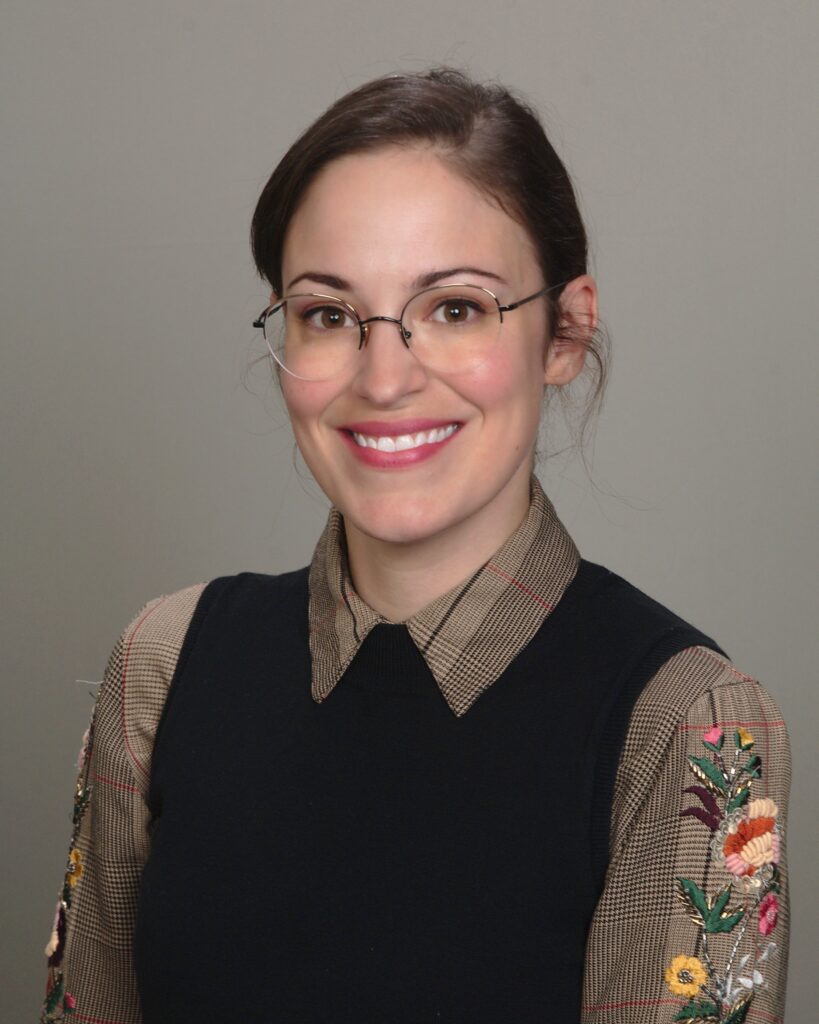
Katie Callahan Neginskiy is an educator, teacher trainer, curriculum designer, publisher, and nonprofit founder with extensive experience in English language education, instructional design, and international professional development. Originally from the Appalachian Mountains of North Carolina, she is now based in Los Angeles with her husband and children.
Katie holds a bachelor’s degree in International Relations and a master’s degree in Curriculum and Instruction with an emphasis in ESL. She spent ten years in Chicago managing educational and workforce development programs that supported adult learners from global communities. Her work focused on language acquisition, workforce readiness, community integration, and adult education, shaping her commitment to accessible and culturally responsive teaching.
She is the founder and executive director of the International Women’s Resource Center, a California‑based nonprofit that provides educational programming, professional development, and community‑building initiatives for women from international backgrounds. Through this work, she has designed and led projects in English language learning, teacher training, digital literacy, and cross‑cultural exchange.
Katie also serves as Vice President of Pro Lingua Learning, where she collaborates with educators and authors to publish engaging TESOL, EFL, and ESOL materials. Her work emphasizes authentic culture, communication, and instructional design that helps learners connect language learning to real‑world life.
Her international work includes multiple English Language Specialist projects and teacher‑training initiatives across the Middle East and Eastern Europe, where she focuses on ethical AI integration, practical pedagogy, and resilient professional learning communities.