
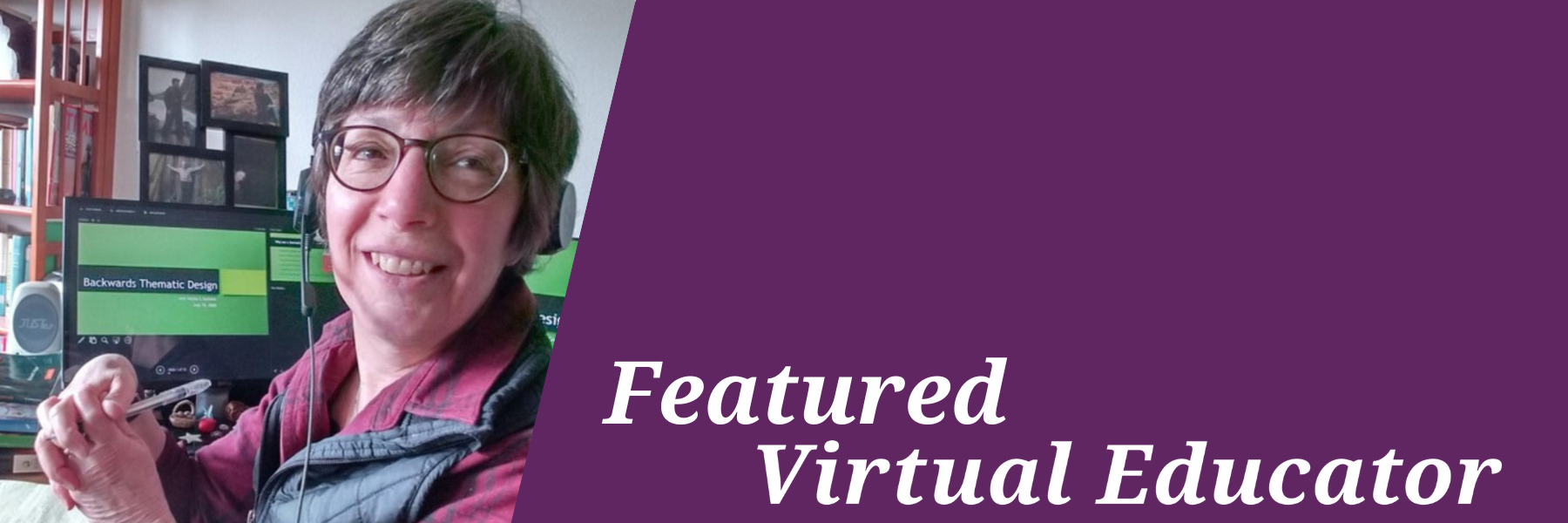
When Norma Gorham learned she had been matched with a project at the National University of Kyiv-Mohyla Academy (NUKMA) in Ukraine, she was thrilled. “A good friend of mine was a graduate from NUKMA, and I was honored to be selected to work with its faculty and its students,” she said. For Gorham, the Virtual English Language Educator Program was the perfect fit. It allowed her to share decades of English language teaching expertise with an international audience while continuing to support her family at home in Washington state.
Across three semesters, she guided students and faculty in exploring timely global issues through the lens of English learning. Her projects brought together creativity, technology, and English for Specific Purposes (ESP), showing how online teaching can create meaningful cultural exchange while strengthening America’s educational partnerships abroad.
Exploring Global Challenges Through Technology
From the outset, Gorham built her courses around how technology shapes society. In the fall semester, she focused on creativity and artificial intelligence, examining ethics and educational policy. Her spring semester course looked at how perception influences understanding. In the summer, she shifted to agriculture, food production, and highlighted Ukraine’s essential role in global food security.
“We looked at how people’s diets have changed in the past 75 years, food and the world’s growing population, current farming practices, technology and farming, how Ukraine is a key factor in feeding the world, and how technology is helping Ukraine’s farmers,” she recalled. These projects gave students more than a space for language practice. They connected classroom discussions to real-world challenges, making English a tool for meaningful engagement on important global issues.
Bringing English for Specific Purposes to Life
English for Specific Purposes was incorporated in our look at AI, farming, and technology.
Gorham is no stranger to ESP, having designed programs in nursing, aviation, education, food production, and industrial math. She drew on this prior experience to connect her Ukrainian students’ studies to the workplace. “English for Specific Purposes was incorporated in our look at AI, farming, and technology,” she explained.
By grounding English instruction in professional contexts, she helped students develop specialized vocabulary and communication skills they could apply in their future careers. In Ukraine, where technology and agriculture are vital industries, this approach provided students with pathways to international cooperation and job opportunities.
Gorham used a similar design to shape her faculty development workshops. Sessions on English as a Medium of Instruction and AI in the Classroom encouraged instructors to consider how a specialized English curriculum could better prepare their students for professional success. These workshops built local teaching capacity while underscoring America’s investment in workforce development.
Innovating in the Virtual Classroom
When students do or create, they have to apply what they learn then reflect to improve.
Teaching online required Gorham to adapt her methods and embrace new tools. She relied on Zoom and Google Classroom while integrating PowerPoint, YouTube, self-created videos, and interactive websites. LOOM quickly became her favorite platform. “I use it as a teaching tool, creating instructional videos for my students, and as a learning tool when I have students create virtual essays combining writing, photos, and speaking,” she said.
Experiential learning remained central to her teaching. “When students do or create, they have to apply what they learn then reflect to improve,” she explained. Even in a virtual setting, she emphasized projects that asked students to build, share, and reflect, turning English learning into a personal and engaging process.
Exchange and Connection with a Lasting Impact
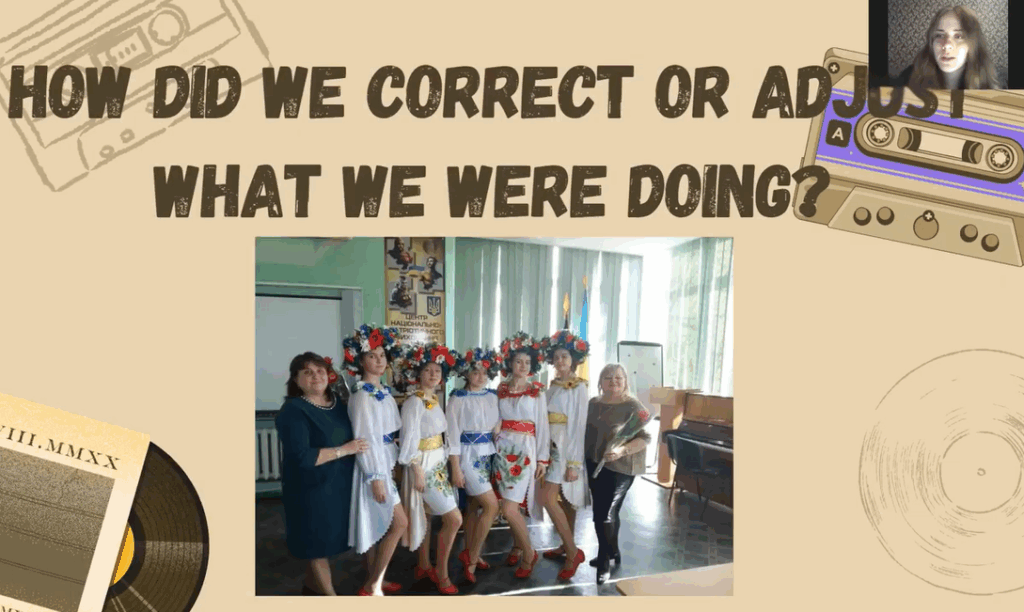
Although technology and ESP were at the core of her work, Gorham describes cultural exchange as one of the most meaningful aspects of her Virtual Educator experience. Students eagerly shared their perspectives, including traditions like the Ivana Kupala summer solstice festival, which one student presented independently at a conversation club. “One of the students prepared a presentation all on her own initiative,” she recalled. These exchanges deepened her understanding of Ukrainian culture while giving students the chance to showcase their heritage in English.
The program also energized her own practice. “My work with NUKMA has re-invigorated my classroom teaching. It has re-kindled my drive to explore new techniques and strategies that align with my educational philosophy in a new online environment,” she said. She also valued the connections she built with other Virtual Educators, describing the community as both supportive and inspiring.
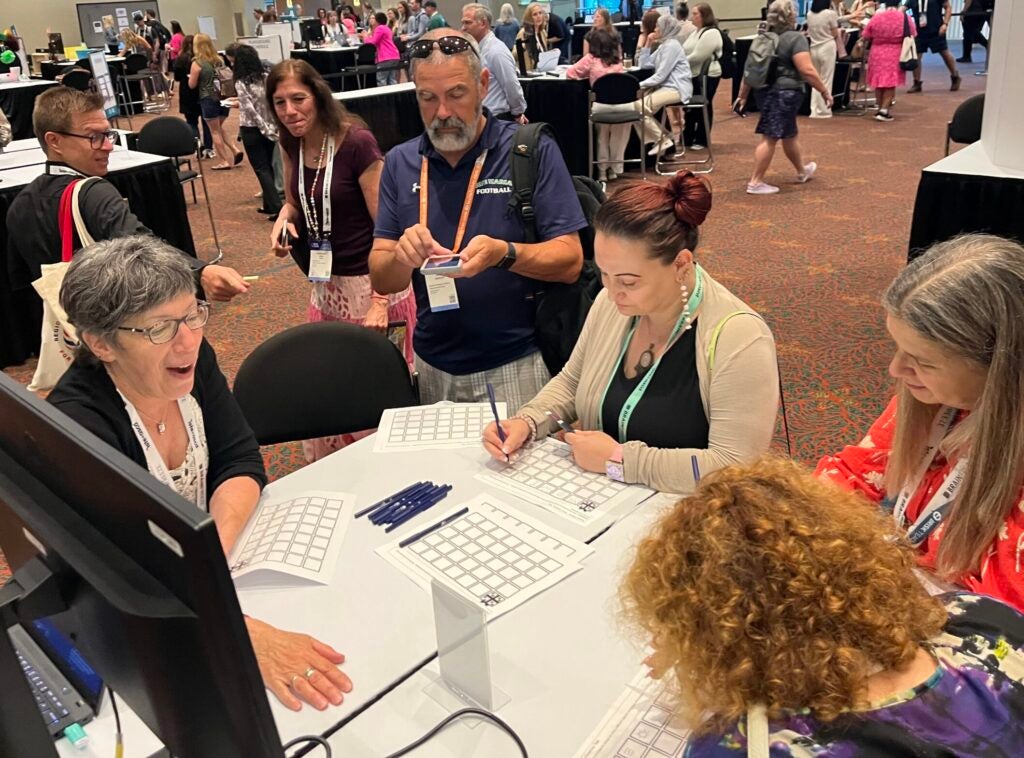
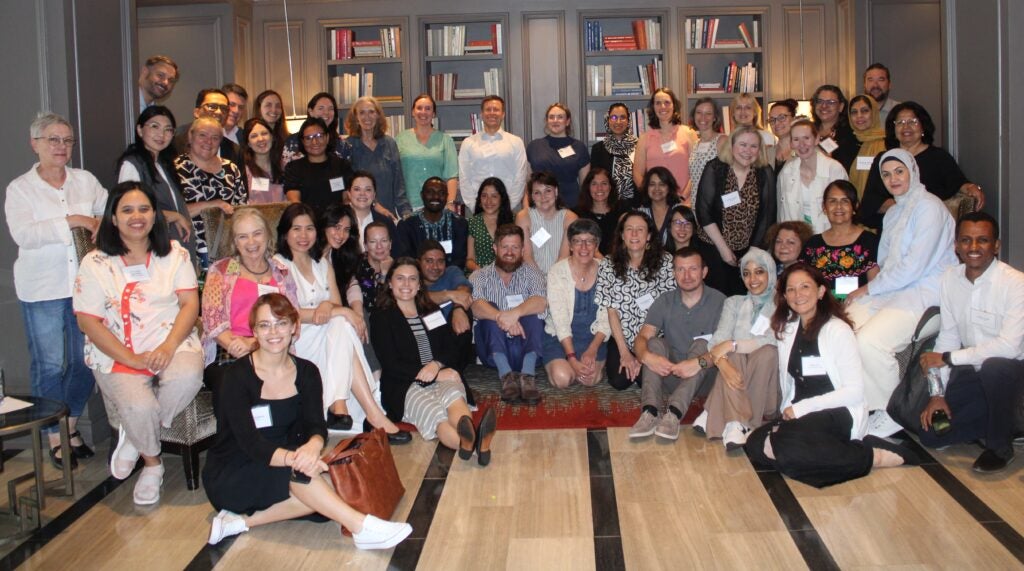
A highlight of the Virtual Educator Program for Norma was meeting a NUKMA counterpart, Nataliia Badior, through the 2025 Virtual Educator Impact Exchange, which was held over the summer in Washington, D.C., and at the ISTE (International Society for Technology in Education) conference in San Antonio, Texas.
Reflecting on her projects, Gorham emphasized the importance of preparing students and faculty for a rapidly changing world. “I tried to think of what would best aid my students in their current environment and circumstances,” she explained. “I hoped to help them develop tools for communicating and interpreting what they see, hear, and feel in their daily lives so they will have the tools needed to be a part of a productive community, locally and globally.”
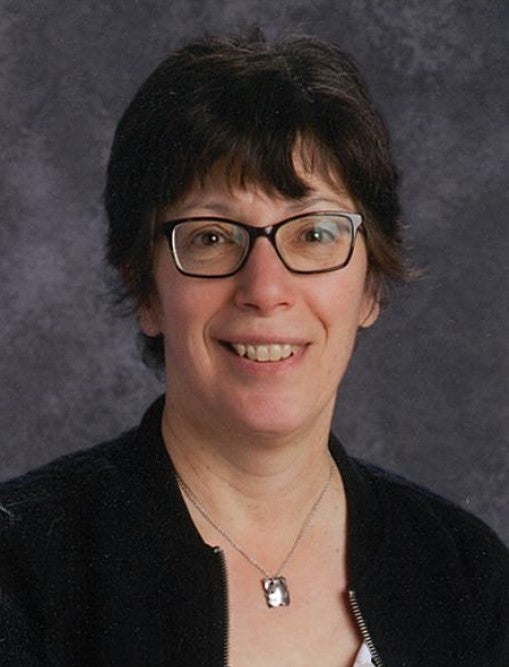
Norma Gorham has been teaching English as a Second Language and Academic English at a variety of institutes and levels in the United States and abroad for the past 25 years. Her teaching experience is varied and extensive. She has designed, prepared, taught, and assessed PreK-12 ESL students in remote Alaska, Intensive English at Green River Community College, EFL to K-8 in Taichung, Taiwan, TESOL teacher prep at Bilkent University in Ankara, Turkey, workplace English for IBEST programs at Centralia College, conversation and business English online for eTeacher, TESOL teacher training courses at Arizona State University, UN Sustainability Goals for Kyunghee University in Seoul, Korea, and English for Aviation Mechanics at Everett College. Currently, she is a curriculum designer and coordinator for the Obirin Gakuen Foundation of America, a teacher trainer for the International TEFL Academy, and a Virtual Educator at the National University of Kyiv-Mohyla Academy in Kyiv, Ukraine, all from her home on the edge of Olympic National Park.